The Sky Mansion of Bengaluru: Inside the Multi-Million Dollar Rooftop Villa That Has Remained Abandoned for Years

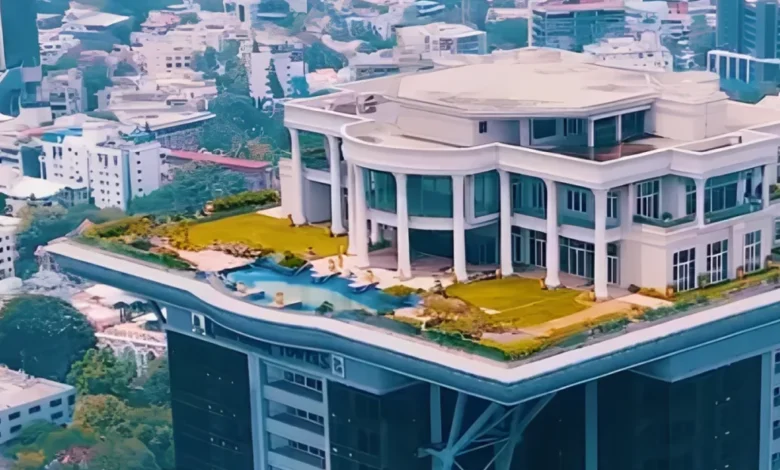
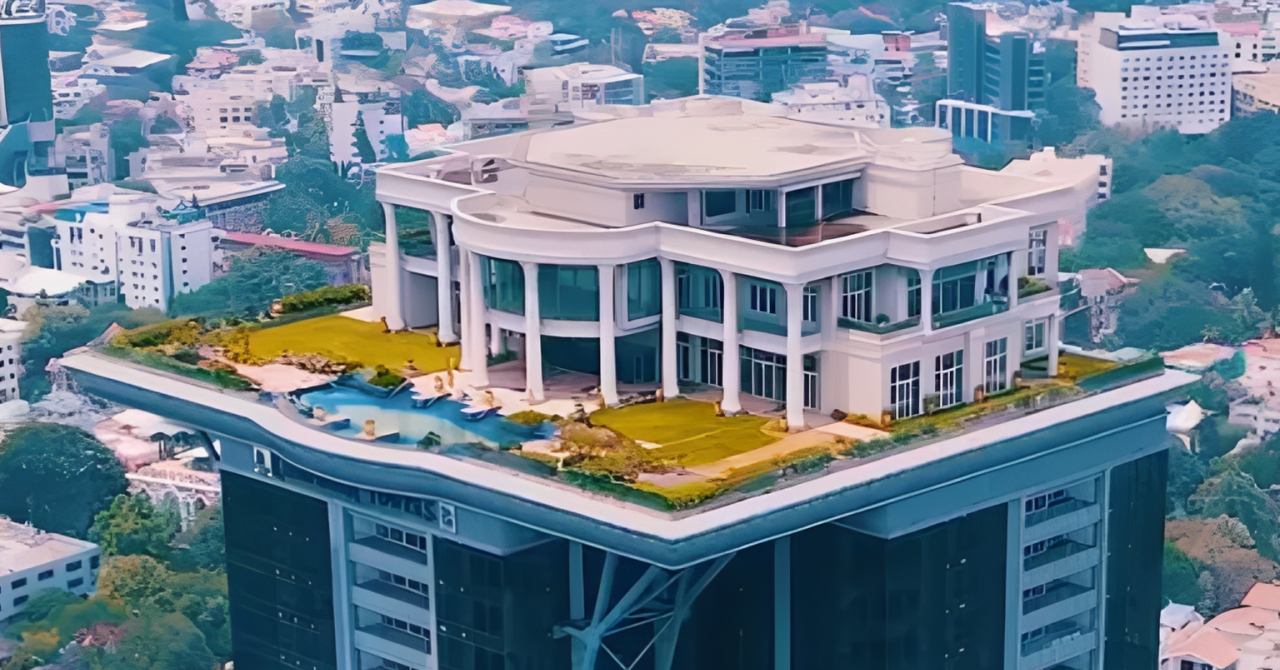
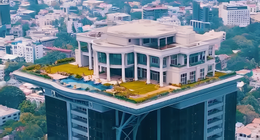
Rising majestically above the bustling and rapidly expanding tech hub of Bengaluru, India, stands an architectural marvel that routinely commands the gaze of passersby. Perched atop a towering 33-story high-rise residential complex is a sprawling, ultra-luxury two-story mansion. Unlike conventional penthouses that seamlessly integrate into the upper tiers of a skyscraper, this engineering feat is constructed entirely as a standalone villa resting on a rooftop. Spanning an impressive 3,700 square meters at an elevation of approximately 122 meters above ground level, the structure defies traditional architectural norms. Yet, despite its staggering valuation of roughly $20 million USD (approximately 500 billion VND) and its luxurious amenities—including a private helipad, infinity pools, and 360-degree observation decks—this sky-high palace has remained completely uninhabited for years, serving as a monument to financial ruin and legal turmoil.
An Architectural Triumph and Engineering Milestone
The creation of the Bengaluru sky mansion was conceived not merely as a high-end real estate product, but as a bold statement of architectural ambition and engineering capability. Designed to mirror a traditional Indian courtyard villa, the structure required meticulous planning to overcome immense structural challenges. Building a massive, multi-level mansion across cantilevered structures at such a high altitude presented severe logistical and physical hurdles for construction teams.
Irfan Razack, Chairman of Prestige Estates Projects—the real estate development firm involved in the venture—has frequently highlighted the immense complexity of the project. Traditional luxury real estate relies on predictable foundation and loading metrics, but anchoring a full-scale villa to the summit of a residential tower required cutting-edge structural engineering. Engineers utilized advanced steel framing and weight-distribution techniques to ensure the tower could support the massive load of the rooftop structure without compromising the safety of the residents living in the floors below.
The resulting property is far more than a luxury residence; it is a testament to modern engineering prowess. With a private helipad that transforms urban transit into a cinematic experience, alongside expansive green gardens and infinity pools that merge visually with the horizon, the mansion offers absolute privacy and panoramic views of the entire city. For the ultra-wealthy, these elements transform real estate into a definitive status symbol.
The Rise of Vijay Mallya: The King of Good Times
The ironic and tragic narrative behind this architectural masterpiece centers on its intended owner: Vijay Mallya, the flamboyant Indian billionaire once dubbed by local and international media as the "King of Good Times." During the height of his career, Mallya was a titan of Indian industry, maintaining a lavish lifestyle characterized by superyachts, private jets, Formula 1 racing teams, and an expansive portfolio of business ventures ranging from liquor to aviation.
Mallya’s business empire was anchored by United Breweries Group, a conglomerate that dominated the Indian beer market, and Kingfisher Airlines, a carrier launched in 2005 that promised a luxurious, full-service flying experience. Under Mallya’s leadership, Kingfisher quickly expanded, acquiring Air Deccan in 2008 to capture a larger share of the domestic market. However, the aggressive expansion strategy coincided with mounting operational costs, high fuel prices, and a severe global economic downturn.
As Kingfisher Airlines began accumulating massive financial losses, Mallya’s lavish personal spending increasingly clashed with the deteriorating financial health of his companies. By the early 2010s, the airline was struggling to pay salaries, fuel bills, and airport fees, eventually leading to the suspension of its operating license in late 2012.
The Financial Collapse and Default Crisis
The downfall of Kingfisher Airlines triggered a cascading series of financial investigations and legal battles that ultimately ensnared Mallya’s personal assets, including the Bengaluru sky mansion. By 2015 and 2016, a consortium of 17 Indian banks—led by the State Bank of India—had initiated aggressive legal actions to recover unpaid loans amounting to over $1 billion USD (approximately 25,900 billion VND).
Investigations revealed that Kingfisher Airlines had secured substantial loans from various public and private sector banks under questionable circumstances, with many funds allegedly diverted to sustain other business ventures or cover operational shortfalls rather than servicing the airline’s core debt. As pressure mounted, lenders moved to classify Mallya as a willful defaulter, a legal designation in India that restricts access to further credit and initiates asset attachment proceedings.
Facing imminent arrest and mounting criminal charges related to financial fraud, money laundering, and conspiracy, Mallya fled India in March 2016, boarding a flight to the United Kingdom. His departure marked a turning point in the saga, leaving the multi-million-dollar rooftop mansion abandoned before he ever had the opportunity to spend a single night inside the property.
Extradition Battles and International Legal Complications
In the years following his relocation to the UK, Mallya became the central figure in one of India’s most high-profile extradition battles. The Indian government, through the Central Bureau of Investigation (CBI) and the Enforcement Directorate (ED), launched concerted diplomatic and legal efforts to secure his return to face trial.
In April 2017, Mallya was arrested in London by the Metropolitan Police on an extradition warrant issued by Indian authorities, though he was subsequently released on bail. Throughout the protracted legal proceedings in British courts, Mallya consistently denied all allegations of wrongdoing. In public statements and court filings, his defense team argued that the charges were politically motivated and that the loans extended to Kingfisher Airlines were genuine commercial transactions that went sour due to adverse market conditions, rather than fraudulent intent.
Mallya also maintained that he had offered a comprehensive settlement plan to Indian banks, proposing to repay a significant portion of the principal amount owed. However, Indian authorities and financial institutions rejected these proposals, insisting on a full repayment and his physical presence in an Indian courtroom.
Although a Westminster Magistrates’ Court initially ruled in favor of his extradition in late 2018—a decision subsequently approved by the UK Home Secretary—Mallya utilized various legal avenues, including appeals and confidentiality proceedings concerning his asylum status, to delay the final execution of the extradition order. To date, the legal wrangling remains unresolved, and Mallya continues to reside in the United Kingdom.
Broader Implications for Indian Banking and Real Estate
The saga of the Bengaluru sky mansion and its fugitive owner transcends a mere tale of billionaire excess; it has left a lasting imprint on India’s financial and real estate landscapes. The case became a watershed moment for the Indian banking sector, prompting regulatory bodies and public sector lenders to tighten lending standards, conduct more rigorous due diligence on high-net-worth borrowers, and adopt a zero-tolerance policy toward large corporate defaulters.
Furthermore, the property itself serves as a cautionary tale within the luxury real estate market. The construction of ultra-customized, hyper-exclusive residential assets often carries distinct liquidity risks. While properties like the Bengaluru rooftop villa command extraordinary valuations on paper, their specialized nature makes them exceptionally difficult to monetize or repurpose when legal disputes arise. As the legal battles surrounding Mallya’s assets drag on through international courts, the sprawling mansion remains a silent, empty sentinel in the sky—a permanent reminder of a fallen empire perched high above the clouds.