Overcoming Infrastructure Bottlenecks: How VinFast Battery-Swapping Electric Motorcycles Are Transforming Urban Commuting in Vietnam

Urban mobility in Vietnam is undergoing a profound transformation, driven by the rapid adoption of electric two-wheelers. However, this transition has not been without its logistical hurdles, particularly for residents living in high-density apartment complexes and multi-story residential buildings. While city dwellers increasingly favor sustainable transportation options to combat urban pollution and rising fuel costs, the physical limitations of existing building infrastructure have created significant bottlenecks for charging electric vehicles (EVs).
Traditional EV charging requires designated parking spaces equipped with high-capacity electrical outlets and robust fire-safety suppression systems—amenities that many older apartment complexes in major metropolitan areas like Hanoi and Ho Chi Minh City simply lack. To address these systemic challenges, automotive and mobility stakeholders are actively pursuing multi-faceted solutions. Chief among them is the rapid deployment of battery-swapping ecosystems, which bypass the need for on-site residential charging entirely and offer urban commuters a seamless alternative to traditional gasoline-powered motorcycles.
The Urban Infrastructure Challenge in High-Density Residential Areas
The complexities of retrofitting older residential buildings with EV charging infrastructure took center stage at the seminar titled "Green Transportation Transition: Removing the Bottleneck for Hanoi Apartment Buildings," held in Hanoi. Representatives from various residential management boards and homeowners’ associations voiced widespread concerns regarding the logistical and financial difficulties of upgrading basement parking lots.
Key obstacles include spatial constraints in subterranean garages, the prohibitive costs of redesigning building structures, and the structural limitations of legacy electrical grids, which were never engineered to handle the continuous, high-draw loads required for simultaneous EV charging. Experts participating in the seminar emphasized that resolving these issues will require active intervention and standardized guidelines from regulatory authorities. Such measures are vital to help building managements understand compliance requirements, upgrade electrical infrastructure safely, and accommodate the burgeoning demand for green vehicles without compromising residential fire safety.
While long-term structural upgrades remain a pressing necessity for property developers, consumers are increasingly turning to immediate, flexible solutions that do not require waiting for on-site infrastructure to catch up. For urban residents who rent their homes, live in older apartments with strict management policies regarding vehicle charging, or lack assigned parking stalls with power outlets, battery-swapping technology offers a viable path forward.
The Mechanics and Convenience of Battery-Swapping
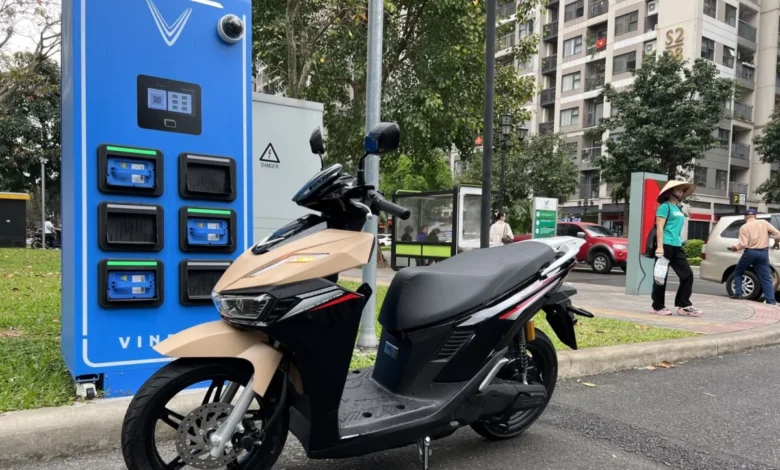
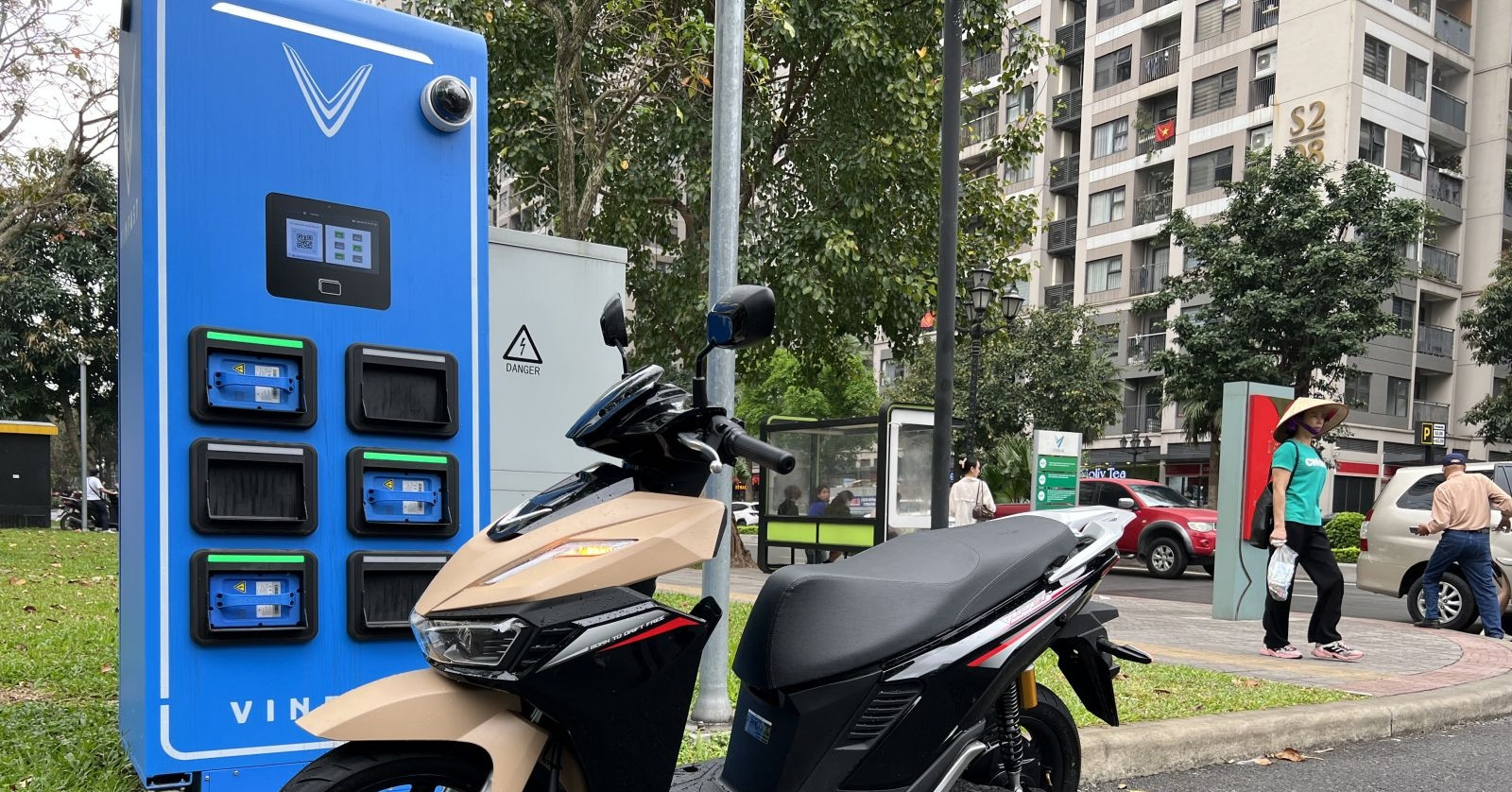
VinFast’s ecosystem of battery-swapping electric motorcycles has emerged as a preferred solution for residents navigating these infrastructure deficits. Instead of plugging vehicles into wall sockets or searching for sparse charging pillars in subterranean garages, riders utilize a network of public swapping cabinets to exchange depleted batteries for fully charged ones in a matter of minutes.
The operational process is designed for maximum efficiency. Riders simply locate a nearby cabinet via a mobile application, unlock a compartment containing a fully charged battery, insert their depleted unit, and retrieve the fresh power source before continuing their journey. The entire transaction takes approximately 60 seconds, eliminating range anxiety and the need to wait for lengthy charging cycles.
This convenience is particularly impactful for working professionals who manage demanding daily schedules involving commutes, school drop-offs, and routine errands. For instance, office workers and parents balancing tight schedules report that the ability to swap batteries at convenient locations near their homes or offices has removed the traditional friction associated with EV ownership. Because swapping stations are strategically placed in residential neighborhoods, commercial centers, and office districts, users no longer depend on home charging availability. Furthermore, for renters and individuals facing parking restrictions, this model optimizes the EV experience entirely independently of building management timelines.
Expanding the Infrastructure Footprint
The viability of the battery-swapping model relies heavily on the density and accessibility of the supporting infrastructure network. V-Green, the global charging station development company founded by Vingroup billionaire Pham Nhat Vuong, has rapidly expanded its footprint across Vietnam to support this growing demand.
As of late 2024, V-Green’s nationwide network has surpassed 80,000 charging and swapping ports, with an aggressive rollout target set to reach 150,000 ports by the end of 2026. This aggressive deployment strategy ensures that points of energy replenishment are situated within dense residential zones, office complexes, parking lots, and major retail malls. By placing infrastructure within close proximity to daily commuting routes, the network provides vehicle owners with robust redundancy and flexibility.
In parallel with public swapping stations, VinFast maintains a comprehensive nationwide network of nearly 800 authorized business locations and service centers specializing in electric motorcycles. This physical network ensures that consumers have immediate access to routine maintenance, technical support, and genuine spare parts regardless of whether they reside in bustling urban centers or suburban areas.
Economic Incentives and Long-Term Warranty Protections
Beyond operational convenience, the economics of battery-swapping and electric vehicle ownership present a compelling value proposition compared to traditional internal combustion engine (ICE) motorcycles. To accelerate market penetration and alleviate initial cost barriers, VinFast has implemented substantial financial incentives for consumers.
A cornerstone of this strategy is the ongoing promotion offering free battery-swapping services—specifically granting up to 20 free battery-exchange sessions per month—for eligible customers utilizing compatible electric motorcycles through mid-2028. This policy significantly reduces the monthly operating expenditure of the vehicles, making daily commuting remarkably cost-effective.
Furthermore, vehicle durability and manufacturer backing play a critical role in consumer confidence. VinFast electric motorcycles utilizing advanced LFP (Lithium Iron Phosphate) battery technology come with comprehensive warranty structures: a 6-year warranty for the motorcycle itself and an 8-year warranty for the battery pack, both unconstrained by mileage limitations. This policy provides exceptional security for high-mileage users, commercial riders, and families relying on a single vehicle for all household transportation needs.
Broad Market Implications and the "Green Future" Campaign
The convergence of flexible battery-swapping infrastructure, extended warranties, and targeted promotional campaigns is reshaping consumer behavior across Vietnam. Initiatives such as the "Green Future" campaign—which offers financial support of up to 6 million VND to owners of legacy gasoline cars, older motorcycles, or acid-battery electric vehicles who transition to VinFast electric two-wheelers—demonstrate a concerted effort to accelerate the phase-out of high-emission transport.
For residents of high-density apartment complexes where infrastructure upgrades lag behind market demand, battery-swapping models represent a crucial bridge technology. By decoupling EV ownership from the necessity of home-charging installations, manufacturers have successfully lowered the barrier to entry for urban green mobility. As the network of swapping cabinets and service centers continues to expand toward its 2026 targets, Vietnam’s urban centers are well-positioned to achieve a faster, more equitable transition toward sustainable public transportation.