Người bán nhà tại Mỹ đang chao đảo vì thị trường địa ốc rơi vào trạng thái đóng băng

The United States housing market, once a red-hot engine of economic growth, has shifted into a period of stagnation that is leaving homeowners trapped in a cycle of frustration and financial uncertainty. Sellers across the nation, who only a short time ago expected bidding wars and premium offers, are now finding themselves forced to slash prices, offer costly concessions, and endure agonizingly long wait times to finalize transactions. This reversal of fortune highlights the profound impact of rising interest rates, inflationary pressures, and a cooling economic outlook on the American dream of homeownership.
The Shift from Seller’s Market to Stagnation
For much of the early 2020s, the U.S. housing sector was defined by extreme supply shortages and historically low interest rates. During that period, sellers held the upper hand, often receiving offers well above their initial asking prices within days of listing. However, that dynamic has been completely upended.
The current environment is characterized by a significant mismatch between seller expectations and buyer capacity. As mortgage rates have climbed to levels not seen in nearly three years, many prospective buyers have been sidelined, unable to afford the monthly payments associated with current property values. Consequently, the inventory of homes for sale has begun to linger on the market, forcing sellers to reconsider their pricing strategies and timelines.
Real-Life Impacts: The Case of Liz Suder and Others
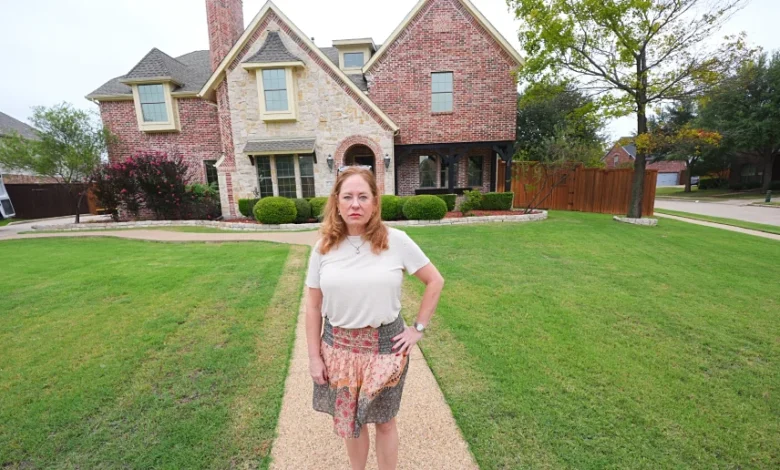
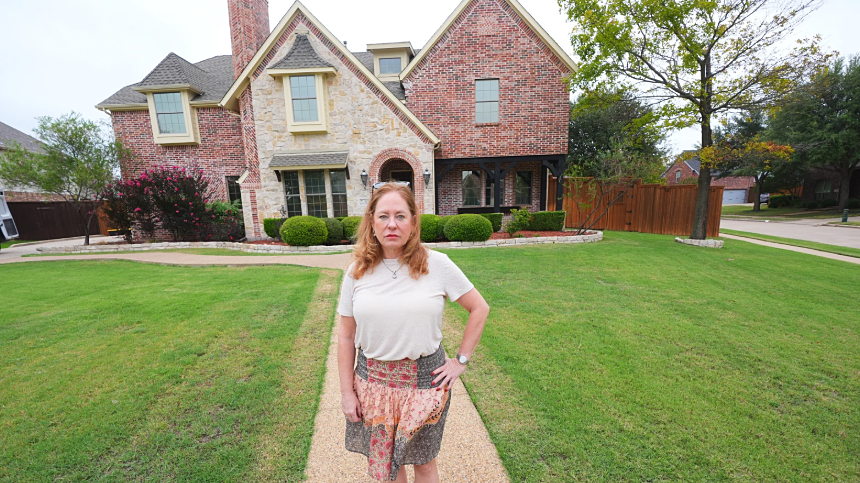
The personal toll of this market shift is best illustrated by the experience of homeowners like Liz Suder, a 56-year-old resident of Murphy, Texas. Seeking to downsize after her three children moved out, Suder listed her four-bedroom, three-bathroom home in April 2025 with an asking price of $750,000. Her strategy was to sell the house first to avoid carrying two mortgages simultaneously.
What should have been a straightforward transition turned into an ordeal lasting more than a year. Despite multiple price reductions, the house remained unsold for months, eventually forcing her to withdraw the listing. She re-listed the property in February of this year at $725,000, hoping to capture the traditional spring buying surge. Ultimately, she accepted an offer of $650,000—a significant $100,000 drop from her initial goal—and had to contribute an additional $9,000 toward repairs to close the deal.
Similarly, Rick Ganga, a 58-year-old in Blaine, Washington, has faced a comparable stalemate. Amidst divorce proceedings, Ganga listed his three-bedroom, two-bathroom home on June 1 for $825,000. Despite lowering the price below $800,000, he has received almost no serious inquiries. "I haven’t had a single offer," Ganga remarked, noting that neighbors have slashed prices by over $100,000. Because he purchased the property in 2022, he lacks the equity to lower his price further, effectively grounding his plans to move forward with the next chapter of his life.
Supporting Data: A Market in Retreat
The cooling of the market is supported by comprehensive data from industry trackers. According to Realtor.com, the median listing price in the U.S. in September saw an annual decline of 1.2%, falling to approximately $419,200. This marked the 11th consecutive month of year-over-year price declines, signaling a structural shift in property valuations.
Furthermore, roughly 21% of all homes listed in September required a price reduction, reflecting the gap between seller optimism and buyer reality. Redfin data paints an even starker picture: in the 50 largest metropolitan areas of the U.S., the number of sellers currently outpaces buyers by nearly 63%. This is the lowest level of buyer activity since 2013, coinciding with a six-year high in the number of re-listings, where properties are pulled and then put back on the market.
The Role of Mortgage Rates and Economic Policy
The primary catalyst for this stagnation is the surge in mortgage interest rates. After briefly dipping below 6% in February, the average rate for a 30-year fixed mortgage in the U.S. has climbed to roughly 7.4%. This rise is a direct result of broader economic factors, including persistent inflation and the Federal Reserve’s restrictive monetary policy.
These elevated rates have effectively doubled the monthly cost of a mortgage for many households compared to a few years ago. As a result, the "affordability gap" has widened, pushing many potential buyers to postpone their purchase decisions in hopes of better conditions in the spring or a potential softening of rates.
Implications for Sellers and the Broader Economy
Economists note that the current environment is heavily tilted in favor of buyers who can afford to enter the market. Mark Fleming, chief economist at First American Financial, stated, "The scale has tilted in favor of the buyer, rather than the seller. That means sellers may have to reduce prices or provide more concessions to sell their homes, and expect longer listing times."
For many, this situation is not just an inconvenience but a major life disruption. Many sellers are unable to take new job opportunities in different cities because they cannot sell their current homes. Others, like those looking to expand their families, are forced to stay in properties that no longer meet their needs. The financial burden of maintaining a property that is "underwater" or simply unsellable at the expected price is preventing household mobility across the country.
Strategic Responses and Future Outlook
In response to the sluggish market, many sellers are attempting to "refresh" their listings. Ethan Butner, a homeowner in Troutdale, Oregon, is a case in point. After his home sat on the market for two months at $480,000, he dropped the price by $30,000, only to have the sole offer fall through. In a final attempt to attract buyers, he installed a new water heater, a new dishwasher, and replaced the flooring. Despite these efforts, he remains in a state of uncertainty.
The outlook for the coming months remains cautious. While some industry analysts hope that a stabilization in interest rates might encourage buyers to return, the current reality remains one of inventory accumulation and price adjustment. As long as the cost of borrowing remains high and economic uncertainty persists, the U.S. housing market is expected to remain a difficult arena for those looking to liquidate their assets.
The phenomenon of "trapped sellers"—individuals who are financially or logistically unable to adjust to the new market equilibrium—is likely to persist. This creates a feedback loop where reduced turnover in the housing market limits inventory for new buyers, yet the existing inventory remains too expensive for the current pool of qualified applicants. As the industry moves into the final quarter of the year, the focus for both homeowners and market experts will be on whether price corrections will be sufficient to restart activity or if a more prolonged period of dormancy is on the horizon.