Taxing Vacant Land in Vietnam: Balancing Financial Pressure, Speculation Control, and Feasibility Challenges

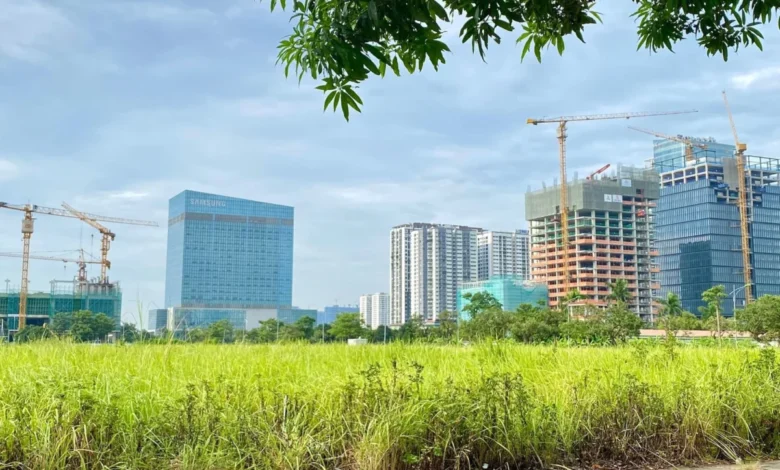
The ongoing legislative debates surrounding Vietnam’s updated tax laws have brought the issue of vacant and abandoned land to the forefront of national economic policy. During a recent parliamentary discussion session held on the morning of November 6, Minister of Finance Nguyen Van Tuan addressed a controversial proposal to impose a 0.2% tax rate on undeveloped, abandoned, or delayed land plots. While the proposal aims to curb real estate speculation and force landowners to put idle assets into productive use, legal and economic experts argue that the measure, in its current form, may lack the financial teeth necessary to reshape investor behavior.
The debate highlights a critical tension in Vietnam’s rapidly developing property market: balancing the need for efficient land utilization against the practical realities of administrative implementation, data management, and asset valuation. As urban areas expand and land values skyrocket, the phenomenon of holding vacant land purely for capital appreciation has become a systemic challenge, prompting policymakers to seek regulatory tools that encourage development rather than hoarding.
Background and Context of Land Speculation in Vietnam
Land is one of Vietnam’s most vital economic resources, serving as a primary driver of industrialization, urbanization, and individual wealth accumulation. However, rapid economic growth has also fostered a speculative culture within the real estate sector. Investors frequently acquire land plots or large project tracts with no immediate intention of developing them, relying instead on macroeconomic growth, infrastructure expansion, and speculative bubbles to drive up property values.
This practice of land hoarding creates severe bottlenecks for the economy. Undeveloped urban plots and stalled investment projects deprive local communities of productive economic activity, inflate housing and commercial real estate prices beyond the reach of average citizens, and undermine urban planning efforts. For years, the government has attempted to address this issue through administrative penalties, such as revoking land use rights for projects that violate construction schedules. However, enforcement has often been hindered by bureaucratic delays, legal ambiguities, and a lack of coordination among regulatory bodies.
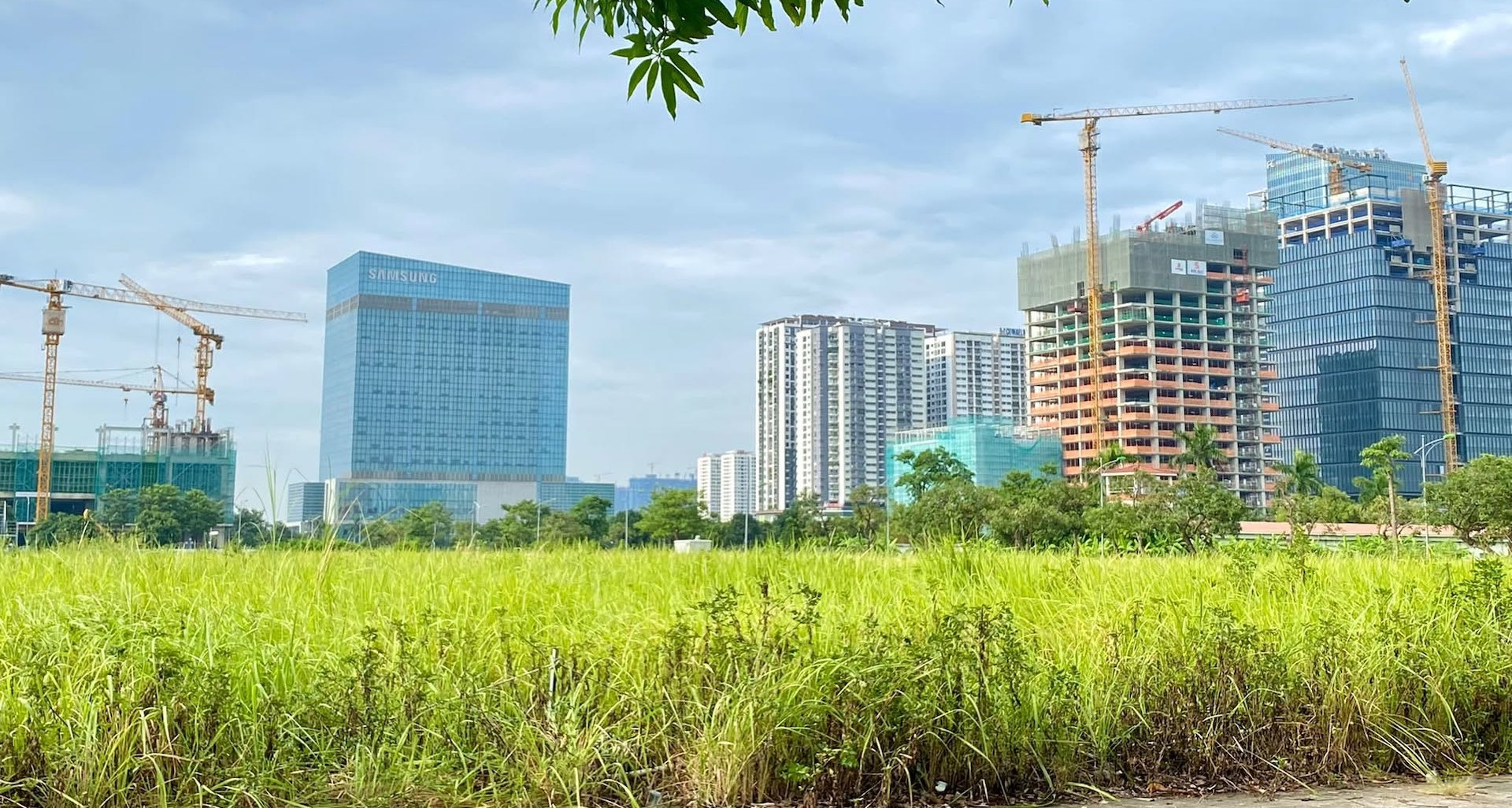
Recognizing that administrative measures alone are insufficient, policymakers have increasingly turned to fiscal tools—specifically taxation—to alter the cost-benefit equation of holding idle land. By introducing a recurring financial penalty for unused properties, the government hopes to create an environment where the cost of holding vacant land outweighs the potential gains from speculative price increases.
Analyzing the 0.2% Tax Proposal: Is the Financial Pressure Enough?
The core of the Ministry of Finance’s current proposal involves levying a 0.2% tax rate on the taxable value of land that is left abandoned or fails to be integrated into productive use within stipulated timeframes. While the principle behind the tax is widely supported by legal and economic analysts, experts caution that the proposed rate may be too modest to deter determined speculators.
To illustrate the financial impact, legal and real estate specialists point to a hypothetical scenario involving a land plot with a taxable value of 10 billion VND (approximately $400,000 USD). Under the proposed 0.2% tax rate, the annual tax liability for this parcel would amount to 20 million VND. In contrast, property values in major metropolitan areas and emerging development zones frequently appreciate by tens or even hundreds of millions—or occasionally billions—of dong annually.
For an investor banking on substantial capital gains, an annual tax bill of 20 million VND represents a negligible cost of doing business. Consequently, landowners may choose simply to absorb the tax expense and continue holding the asset, waiting for market prices to rise further rather than selling the property or investing in construction. In such scenarios, while government tax revenues might see a marginal increase, the primary policy objective—forcing the land into active use—remains unfulfilled.
Experts argue that the true measure of the policy’s success should not be the amount of revenue collected for the state budget, but rather tangible behavioral outcomes: how many hectares of land are actually brought into productive use, and how significantly the duration of land abandonment is reduced. To achieve these goals, some analysts suggest implementing a progressive tax structure that increases the tax rate the longer a property remains vacant.

The Three Pillars of an Effective Vacant Land Tax
Legal experts, including prominent real estate attorneys and industry advisors in Hanoi and Hoong Chi Minh City, emphasize that for a vacant land tax to achieve its intended effect, policymakers must simultaneously satisfy three fundamental requirements: accurately identifying the target subjects, establishing meaningful financial pressure, and ensuring practical implementation feasibility.
1. Accurate Identification of Target Subjects
The first major challenge lies in defining precisely which land parcels are subject to the higher tax rate. Vietnam’s land-use framework involves complex obligations across different stages of ownership, from state land allocations and land-use conversions to private property transfers.
Currently, landowners pay non-agricultural land-use taxes with rates ranging from 0.03% to 0.15%, depending on whether the plot falls within or exceeds established quotas. When transferring real estate, individuals face a 2% personal income tax on the transfer price, while corporate entities are subject to a 20% corporate income tax on real estate transfer profits.
Introducing a separate 0.2% tax for vacant land requires unambiguous legal criteria to distinguish between genuine development delays caused by objective factors—such as bureaucratic bottlenecks, infrastructure deficits, or zoning adjustments outside the owner’s control—and intentional hoarding by speculators. For individual residential land, owning a plot without an immediate house construction does not automatically equate to malicious land hoarding. Regulations must clearly specify grace periods, allowable non-use durations, and exemptions for cases where owners are legally restricted from building.
2. Creating Appropriate Financial Pressure
As demonstrated by comparative calculations, the financial burden must be substantial enough to alter investor calculations. If the carrying cost of idle land is lower than the projected return on speculative appreciation, the tax will fail. Policymakers must calibrate the tax rate—or introduce dynamic, time-scaled penalties—to ensure that holding vacant land becomes financially unviable over the medium to long term. Furthermore, the tax must be structured to prevent wealthy investors from simply passing compliance costs onto end-users in secondary markets.

3. Ensuring Practical Feasibility Through Data Integration
Perhaps the most formidable obstacle to implementing the vacant land tax is administrative execution. According to legal specialists, the foundational "backbone" of any successful property tax policy is a unified, highly integrated national database connecting land management agencies, tax authorities, and municipal construction departments.
Assessing individual land parcels requires close inter-agency cooperation to verify ownership, track exact geographic boundaries, determine historical development timelines, and monitor utility consumption. While utility data—such as electricity and water records—can serve as useful supporting indicators of whether a property is actively inhabited or utilized, they must be cross-verified against official legal titles, approved project schedules, and physical site inspections.
Relying solely on rudimentary field inspections or inconsistent local assessments risks driving up administrative costs while generating friction, disputes, and potential corruption at the grassroots level. If local authorities lack standardized tools and transparent data sharing, the enforcement process could become unevenly applied across different provinces and municipalities.
Broader Economic Implications and Official Perspectives
During the parliamentary proceedings, Minister of Finance Nguyen Van Tuan acknowledged that while the government has carefully weighed the 0.2% tax proposal, establishing clear legal definitions within the Land Law remains an absolute prerequisite. Tax authorities and land management agencies must work in tandem to cross-reference data and prevent loopholes that could facilitate tax evasion or misclassification.
Industry leaders have similarly voiced nuanced perspectives on the policy. Nguyen Vo Cao, Chairman of the Board of Directors at Khang Land Holding, noted that while taxing vacant land is a necessary step to cool down overheating property markets and shift developer mindsets, the ultimate success of the reform depends entirely on execution. Property markets must reward the creation of genuine economic value rather than mere asset inflation.

Other market analysts point out that the implementation of a vacant land tax must be synchronized with broader legal reforms, including revisions to the Law on Land, the Law on Housing, and the Law on Real Estate Business. Without harmonization across these legislative pillars, contradictory provisions could create legal gray areas that litigious landowners might exploit.
Timeline and Next Steps for Legislative Reform
The discussion on November 6 marks an ongoing legislative evolution rather than an immediate implementation. As the National Assembly continues to review and debate amendments to various tax and land laws, lawmakers are expected to refine the specific criteria, tax thresholds, and enforcement mechanisms associated with idle property penalties.
Key milestones in the legislative process moving forward will include:
- Drafting Detailed Guidelines: Ministries are tasked with formulating explicit criteria to define "abandoned land" and establishing standardized measurement metrics for both commercial projects and individual residential plots.
- Database Integration Initiatives: Enhancing digital infrastructure to link national land registries with tax administration systems, ensuring transparent tracking of property utilization status.
- Pilot Program Evaluations: Reviewing experiences from local municipalities that have previously attempted to monitor and penalize delayed real estate projects.
- Public Consultation and Revisions: Gathering feedback from legal experts, real estate enterprises, and citizens to balance regulatory strictness with economic practicality.
Conclusion
The proposal to levy a 0.2% tax on vacant and abandoned land represents a significant policy instrument in Vietnam’s ongoing efforts to regulate its real estate market and optimize national land resources. While the initiative signals a clear regulatory shift toward penalizing speculative hoarding, its ultimate effectiveness will hinge on robust data infrastructure, clear legal definitions, and a financial structure capable of exerting genuine market pressure.
As lawmakers continue to debate the finer points of the legislation, the overarching goal remains clear: transforming land from a passive vehicle for speculative enrichment into an active engine for sustainable economic development and social value creation.