Vietnam Digital Enterprises Forge Global Path at Second International Cooperation Conference


On March 26, the Ministry of Information and Communications (MIC) convened the second Global Digital Cooperation Conference in Hanoi, a strategic event aimed at accelerating the international expansion of Vietnam’s burgeoning digital technology sector. Under the theme "Opportunities for Vietnamese Digital Technology Enterprises in Overseas Markets," the conference served as a pivotal platform for dialogue between state management agencies, industry experts, and private sector leaders. This summit marked a significant milestone in the ongoing government-led initiative launched in February 2023, which seeks to transform Vietnam into a global hub for digital innovation and high-value software services.
The Strategic Imperative: Beyond Domestic Borders
The core narrative of the conference was articulated by Minister of Information and Communications Nguyen Manh Hung. During his address, he emphasized that the transition to a high-income nation is inextricably linked to the international competitiveness of the domestic technology sector. "If we do not go global, if we do not compete, if we do not conquer foreign markets, Vietnam cannot become a developed country with high income," Minister Hung stated. He urged Vietnamese enterprises to "reach out and conquer the world" by leveraging their unique "Make in Vietnam" identity while simultaneously localizing their strategies to meet the specific requirements of international clients.

This directive is not merely aspirational; it is a fundamental shift in the government’s industrial policy. By encouraging companies to adopt a "Vietnamese path" of development, the Ministry aims to foster a generation of firms that are not only service providers but also originators of proprietary technology, capable of competing with established players in North America, Europe, and East Asia.
A Chronology of Digital Diplomacy and Expansion
The push for internationalization has been a multi-year effort involving various stakeholders. The following timeline outlines the evolution of this policy:
- February 2023: The Ministry of Information and Communications officially launched the comprehensive program to support domestic digital firms in expanding their operations overseas, providing legal, networking, and market-entry assistance.
- Mid-2023: Initial outreach programs were conducted in key markets, including Japan and Singapore, to assess the feasibility of Vietnamese digital solutions in these highly competitive landscapes.
- Late 2023: The sector reported an increase in foreign revenue, with 1,500 enterprises now deriving income from international clients, signaling a successful initial phase of the government’s support program.
- March 26, 2024: The second Global Digital Cooperation Conference was held, shifting the focus from initial outreach to deepening technical cooperation and regulatory alignment.
Supporting Data and Market Performance
The economic data presented at the conference underscores a positive trend. By the end of 2023, the total revenue generated by Vietnamese digital enterprises from foreign markets reached approximately $7.5 billion, a 4% increase over the previous year. Furthermore, the number of firms successfully exporting digital services grew by more than 7% compared to 2022.
According to data from the Foreign Investment Agency (Ministry of Planning and Investment), there are currently over 200 active investment projects by Vietnamese entities in the information and communications sector abroad. These projects exhibit a distinct geographic and sectoral focus: telecommunications projects are generally larger in scale and primarily concentrated in Africa, while IT and software services projects are more numerous, smaller in scale, and strategically located in tech-hubs such as Singapore, the United States, and Japan.
Expert Perspectives and International Collaboration
The conference featured high-level input from international representatives, including those from the European Chamber of Commerce (EuroCham) and the Japan External Trade Organization (JETRO). These organizations provided critical insights into how Vietnamese firms can successfully navigate complex foreign regulatory environments.
Eunjung Han, Vice Chair of the Digital Subcommittee at EuroCham, highlighted the European Union’s commitment to digital transformation. She detailed the "Europe Digital" program, which provides strategic funding for projects in supercomputing, artificial intelligence, cybersecurity, and advanced technical skills until 2027. She advised that for Vietnamese companies looking to enter the EU, a deep understanding of the legal framework—specifically regarding data privacy and investment incentives—is as crucial as technical expertise.

Meanwhile, Takeo Nakajima, Chief Representative of JETRO, noted the success of companies like FPT in the Japanese market. He clarified that while the Japanese government does not typically provide direct financial subsidies for foreign firms, it offers extensive "soft support," such as business matching, regulatory consulting, and R&D partnership facilitation. This highlights a shift in focus: Vietnamese firms no longer just need capital; they need deep, contextual knowledge of the markets they intend to enter.
Analysis: Implications for the Vietnamese Digital Ecosystem
The drive to go global carries profound implications for the domestic economy. First, it forces a higher standard of quality control and innovation. To compete in the U.S. or EU markets, Vietnamese firms must adhere to international standards of security, scalability, and efficiency. This "export pressure" acts as a catalyst for domestic improvement, effectively raising the bar for the entire industry.
Second, the shift toward overseas markets creates a brain-drain challenge that the government is attempting to mitigate by fostering a "global-local" talent pipeline. By encouraging firms to work abroad, the government hopes that these companies will eventually bring back high-level management expertise, international business connections, and advanced technical know-how to the Vietnamese market.

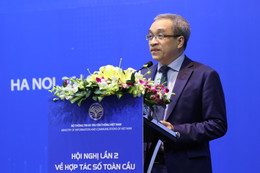
However, the path is not without risks. As Deputy Minister Phan Tam noted, expansion into foreign markets is fraught with challenges, including currency fluctuations, geopolitical tensions, and varying levels of protectionism. The Ministry’s role, therefore, is to act as a bridge, providing the necessary intelligence and diplomatic cover to help firms mitigate these risks.
Looking Ahead: The Role of Multi-Ministry Coordination
The conference underscored the necessity of a coordinated, "whole-of-government" approach. Representatives from the Ministry of Foreign Affairs, the Ministry of Planning and Investment, and the Ministry of Industry and Trade participated in the discussions, acknowledging that digital expansion is not solely an IT issue. It is a matter of foreign trade policy, diplomatic relations, and economic diplomacy.
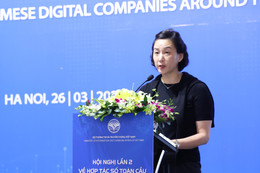
The Ministry of Foreign Affairs, represented by Deputy Director General of the Department of Economic Affairs Dang Khanh Linh, highlighted the immense "market pie" still available to Vietnamese firms. She specifically pointed to the global demand for skilled human resources in the tech sector, which Vietnam is uniquely positioned to fill, provided that educational and vocational training systems are aligned with international requirements.
Conclusion: A Foundation for Long-Term Growth
As the second Global Digital Cooperation Conference concluded, the message to the industry was clear: the era of purely domestic growth is transitioning into an era of global integration. The government has committed to continued support, moving beyond initial outreach to providing nuanced, market-specific guidance.
For Vietnam, the success of this initiative will be measured not just in export revenue, but in the maturation of its technology companies into global brands. By leveraging the insights shared by international partners and maintaining a rigorous focus on high-value, proprietary technology, Vietnam is steadily carving out a role for itself in the global digital economy. The path forward will require resilience, a commitment to international standards, and the agility to adapt to a rapidly shifting global landscape, but the foundation established by these collaborative efforts provides a robust framework for long-term success.