Pocket Plant Doctors: How Artificial Intelligence is Diagnosing Crop Diseases in Seconds

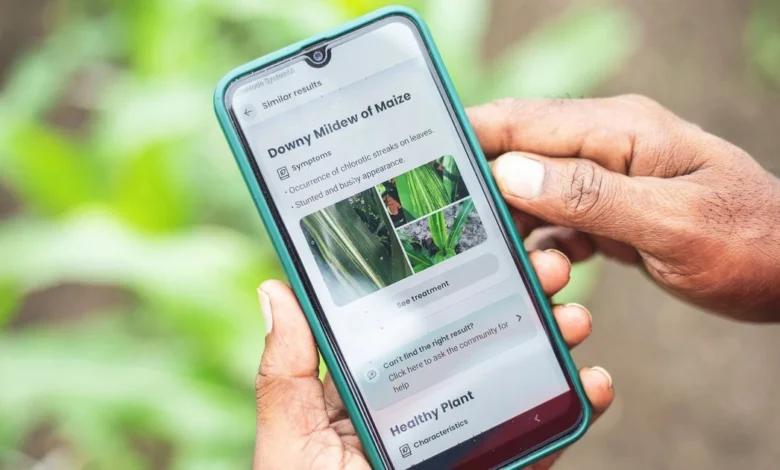
Agriculture has long been an industry dictated by uncertainty, where farmers must routinely act as meteorologists, financial analysts, and biological detectives. Among these challenges, identifying and managing crop diseases quickly has historically separated a bountiful harvest from catastrophic financial ruin. Traditionally, this diagnostic process relied heavily on the visual inspection of human agronomists, local agricultural extension officers, or trial-and-error methods by the farmers themselves. However, the sheer volume of potential plant pathogens—numbering in the thousands—means that by the time a human expert can physically inspect a remote field, an outbreak may have already devastated whole acreage. In recent years, however, a quiet technological revolution has been taking root directly inside the pockets of farmers worldwide. Powered by advanced computer vision and artificial intelligence, mobile applications are now transforming smartphones into diagnostic laboratories, allowing growers to snap a photograph of a discolored leaf and receive a precise identification of plant pathology within seconds.
The Mechanics of Computer Vision in Agriculture
To understand how artificial intelligence can "see" a plant leaf and diagnose its ailments, one must look closely at the underlying mechanics of machine learning. The process mirrors the accumulation of expertise in human agronomists who have spent decades analyzing millions of diseased plant samples. Instead of human eyes, however, computer scientists and agricultural researchers feed massive datasets of high-resolution images—capturing leaves, stems, flowers, and fruits affected by various pathogens—into deep learning neural networks.
Every image is meticulously labeled by plant pathologists with specific metadata detailing the crop species and the exact disease present. As the algorithm ingests millions of these data points, it begins to recognize subtle patterns that might escape the untrained human eye. It maps out the geometry, coloration, structural anomalies, and the distinctive halos or borders surrounding lesions on a leaf.
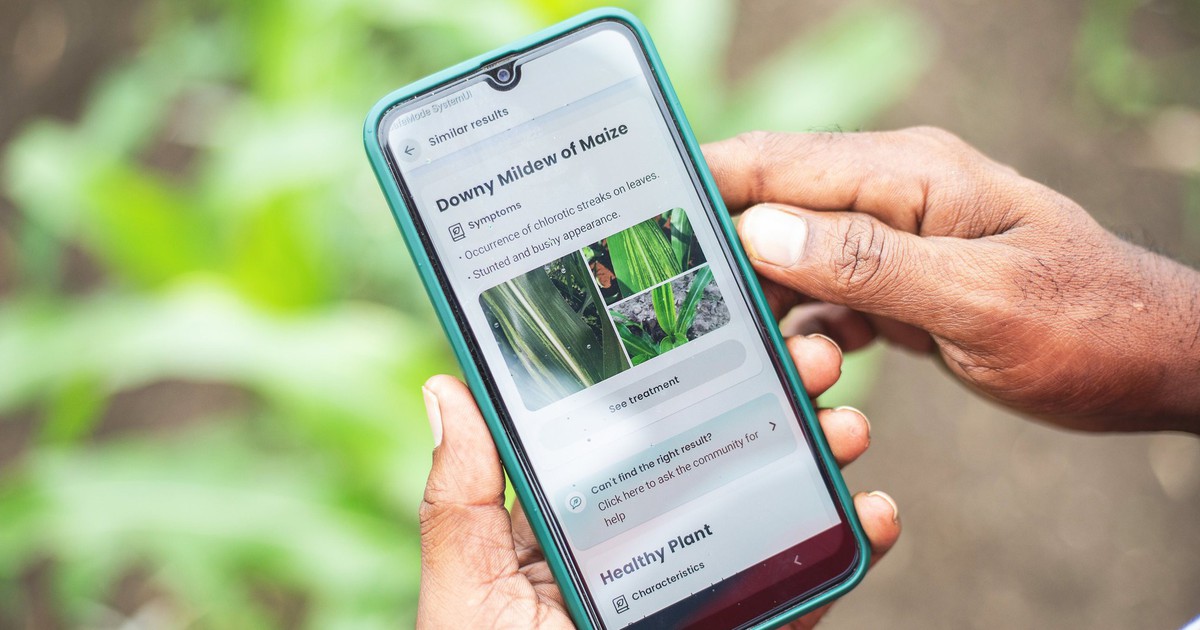
Among the pioneers in this space is Plantix, an application developed by the German agricultural technology firm PEAT in 2015. Over the past decade, Plantix has evolved into one of the most widely adopted digital agronomy tools globally, accumulating nearly 10 million downloads on Google Play. According to data from the Food and Agriculture Organization (FAO) of the United Nations, Plantix’s underlying neural network has been trained on a staggering dataset of approximately 60 million images. Today, the application is capable of identifying well over 500 distinct pests, diseases, and nutritional deficiencies across more than 50 staple crops, all while remaining entirely free for farmers to use. Beyond instantaneous image-based diagnostics, the application serves as a comprehensive digital ecosystem, offering an extensive disease encyclopedia with preventative guidelines, peer-to-peer expert forums, regional outbreak warnings, localized fertilizer recommendations, growth-stage-specific cultivation tips, and real-time meteorological forecasts.
A Step-by-Step Guide to Mobile Crop Diagnostics
Utilizing artificial intelligence for on-the-farm decision-making is designed to be seamless, requiring minimal digital literacy. Farmers can access the tool by downloading the application from major app marketplaces like Google Play. Upon launching the software for the first time, users select their preferred language and grant essential permissions, such as camera access for capturing leaf anomalies and location services to receive hyper-local pest and disease outbreak alerts.
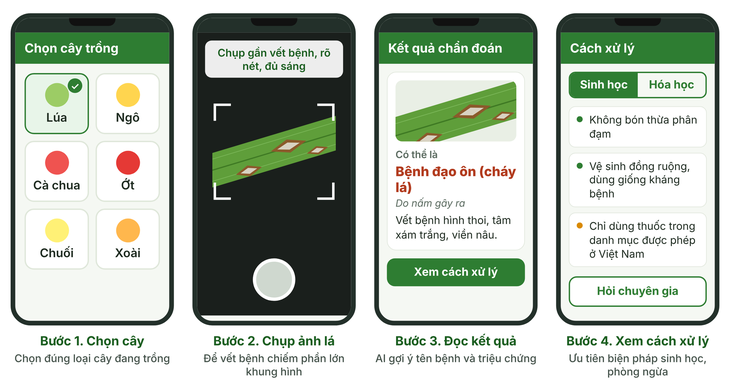
The diagnostic workflow is broken down into four distinct phases. First, the user selects the specific crop currently under cultivation from an extensive drop-down menu—such as rice, corn, or wheat. Specifying the crop narrows the AI’s parameter search, significantly enhancing diagnostic accuracy. If a farmer’s specific crop is not yet indexed in the system, they are redirected to community forums or human experts.
Second, the user captures a photograph of the symptomatic plant tissue. Because image quality directly dictates diagnostic accuracy, adherence to specific photography guidelines is critical. The user must bring the camera close to the lesion, ensuring that the affected area occupies the vast majority of the frame while avoiding blurry or poorly lit shots.
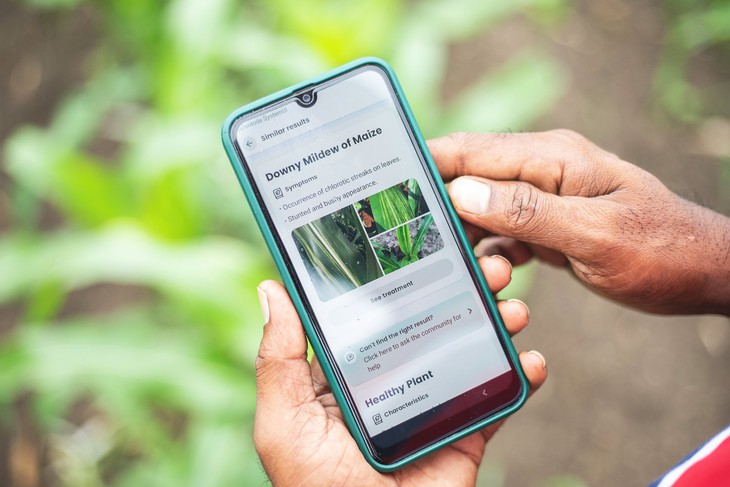
Third, within mere seconds, the application processes the image and presents the most statistically probable disease alongside a detailed description of its symptoms. For instance, in the case of rice blast—a devastating fungal disease—the app highlights characteristic spindle-shaped lesions with gray centers and brown margins. The farmer then cross-references this digital diagnosis with the physical symptoms visible in their field.
Fourth, the application provides a suite of recommended treatments, categorized into biological, cultural, and chemical interventions. Cultural practices might include withholding excessive nitrogen fertilizer, sanitizing fields, or utilizing resistant seed varieties. If uncertainties remain, the integrated expert forum allows farmers to consult with agronomists directly through the platform.
Best Practices for Accurate Field Photography
While the technology is remarkably sophisticated, the garbage-in, garbage-out principle of data science dictates that the accuracy of an AI diagnosis is inextricably linked to the quality of the input image. Agricultural experts emphasize several operational dos and don’t to maximize diagnostic reliability.
Farmers are strongly advised to capture close-up shots of plant parts displaying clear symptoms, ensuring the lesion dominates the frame rather than photographing an entire plant or a distant crop row from afar. Lighting is equally crucial; optimal results are achieved under diffused daytime natural light. Users should avoid direct backlighting, deep shadows, or obstructions cast by hands and neighboring foliage.
Stability is another key factor. Operators must maintain a steady hand and tap directly on the screen’s lesion to lock in focus, strictly avoiding motion blur, camera shake, or rain-streaked lenses. To ensure comprehensive analysis, experts recommend capturing two to three photographs from varying perspectives, including the upper and lower surfaces of leaves, stems, and fruits, rather than blindly trusting a single snapshot. Furthermore, targeting leaves with early, typical symptoms yields vastly superior results compared to photographing leaves that are entirely necrotic or dead, where initial pathogen markers have long since vanished.
Bridging the Gap Between Digital Hints and Field Realities
A critical nuance often overlooked by technology adopters is that smartphone-based AI diagnostics provide probabilities and recommendations rather than definitive prescriptions. Dr. Nguyen Le Hoang Long, deputy director of operations at Hoang Long Vina Fertilizer Joint Stock Corporation (Agrilong), notes that while these applications are powerful navigational aids, they are built for international markets. Consequently, the chemical active ingredients or specific commercial pesticide formulations suggested by global algorithms may not always align with the permitted plant protection product registries of specific nations, such as Vietnam.
"The result on the smartphone screen is merely a suggestion," Dr. Long explains. "To turn that suggestion into correct action, farmers should take the next five steps: verification, consultation, treatment, monitoring, and follow-up."
Before purchasing any chemical treatment, growers are advised to cross-reference the digital results and photographic evidence with local agricultural extension officers, certified agronomists, or reputable local distributors. This verification step ensures regulatory compliance, environmental safety, and economic efficiency. Following treatment implementation, farmers should return to the exact geographic coordinates a few days later to capture follow-up images, verifying whether the pathogen’s progression has successfully halted.
Artificial Intelligence as an Assistant, Not a Miracle Cure
Despite the remarkable advancements in agricultural machine learning, experts stress that artificial intelligence must be viewed as an assistive tool rather than an infallible oracle. Databases for regional and specialty crops—such as durian or certain tropical tubers—remain sparse, meaning that predictions for non-staple or newly commercialized crops may occasionally yield inaccuracies or total omissions.
Furthermore, many plant pathologies share identical phenotypic expressions. A yellowing leaf, for instance, can be indicative of a fungal infection, a severe nitrogen deficiency, or waterlogging due to poor drainage. Relying blindly on a single photograph without contextual agronomic knowledge can lead to misdiagnoses and wasted resources.
As agricultural technology continues to evolve, the integration of artificial intelligence into daily farming practices represents a monumental leap forward in democratizing access to agronomic expertise. By combining the rapid analytical power of machine learning with the localized wisdom of human agricultural experts, modern farmers are better equipped than ever to protect their yields, ensure food security, and navigate the unpredictable challenges of twenty-first-century agriculture.