Singer Phuc Anh Unveils Cinematic Masterpiece Má Cò and Achieves a Historic First by Wearing Four Creative Hats Simultaneously


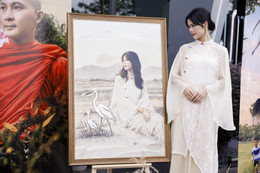
The contemporary Vietnamese music scene witnessed a significant milestone on October 25, when versatile artist Phuc Anh officially introduced her latest ambitious project, the music video titled Má Cò. Held during a highly anticipated press conference in Ho Chi Minh City, the event served as a major platform for the singer to announce her return to the spotlight following a profound, emotionally resonant journey exploring the cultural landscapes of Vietnam’s 54 distinct ethnic groups. Má Cò not only marks a crucial chapter in Phuc Anh’s evolving artistic career but also establishes a historic benchmark for the artist, who for the very first time has taken on four critical creative roles simultaneously: director, screenwriter, composer, and lead vocalist.
The unveiling of Má Cò drew considerable attention from media professionals, industry peers, and cultural enthusiasts alike. By anchoring the narrative in the poignant visual imagery of a traditional Southern Vietnamese mother, Phuc Anh has successfully constructed a layered storytelling tapestry that explores themes of unconditional maternal love, generational filial piety, and the enduring transmission of affection across time and circumstance. Continuing the distinctive cinematic musical style that has become her trademark over recent years, the project reflects a meticulous creative process. Phuc Anh carefully curated a lyrical vocabulary rich in emotional resonance, seamlessly blending it with deep, evocative melodies designed to transport listeners back to the comforting realms of childhood memory and familial sanctuary.
The Symbolic Core: The Image of the Little Stork in Vietnamese Folklore
At the heart of Má Cò lies a powerful central metaphor: the image of the little stork, a deeply ingrained archetype derived from traditional Vietnamese lullabies, folk poetry, and oral literature that have echoed through generations. For centuries, the stork has served as the poetic personification of the traditional Vietnamese mother—a figure characterized by tireless endurance, resilience in the face of hardship, and an unwavering commitment to nurturing her family despite a life of manual labor and quiet sacrifice.

Drawing inspiration from the boundless, unconditional love demonstrated by her own parents and her maturation into motherhood, Phuc Anh penned lyrics that resonate with raw emotional gravity. Lines from the composition paint a vivid picture of maternal sacrifice: "In this turbulent mortal world, half a lifetime of widowhood raising children / A single soaked mat, mother lays her child down in the pouring storm / Feeding hungry children, mother’s hands stained with mud and toil / On a bright moonlit night in those years, mother follows grandmother."
The music video meticulously mirrors the narrative arc of the song, focusing on a young mother who, in her early thirties, faces the devastating reality of a husband who departed for distant labor and never returned. Left entirely alone to raise four children, the protagonist navigates decades of relentless struggle. The narrative extends across a duration of over seven minutes, capturing the poignant transformation as her four children grow into adulthood while the mother remains in her modest, weathered home. She lives simply, spending her days watching over impoverished children in the neighborhood until she ultimately passes away.
Significantly, the cinematic depiction intentionally avoids exploitative melodrama, nihilism, or despair. Instead, the mother’s transition from life is portrayed as serene and peaceful, cradled within the loving arms of her grown children. Through this directorial choice, Phuc Anh emphasizes a core philosophical message: the love a mother bestows upon her offspring is immutable and continuous, designed to transcend mortality and propagate outward from one generation to the next.
Cultural Integration: Celebrating the Heritage of the Khmer Krom Community
Beyond its emotional narrative, Má Cò stands out for its unprecedented integration of the rich cultural and religious traditions of the Khmer Krom ethnic minority residing in Southern Vietnam. During the production phase, Phuc Anh and her dedicated production crew traveled extensively to Can Tho and neighboring localities, conducting thorough field research and actively seeking permission and guidance from local Buddhist monks and community elders.

The resulting footage offers a remarkably authentic and vibrant window into the daily lives of the Khmer Krom people. Viewers are treated to accurate visual depictions of the characteristic Khmer temple architecture, the solemn morning alms-giving rituals practiced by Theravada Buddhist monks, and the traditional monastic ordination ceremonies undertaken by young boys within the community.
Within the narrative framework of the music video, one of the four children—as a young boy—is depicted sharing his meager portion of rice to support the monks passing by on their daily alms round. As he matures, the boy expresses a heartfelt desire to take refuge in Buddhism and seek ordination, a request met with the mother’s gentle and supportive consent. Through these intricate cultural details, Phuc Anh purposefully articulates a profound reverence for Theravada Buddhism while celebrating the multifaceted mosaic of Vietnam’s national heritage. This meticulous attention to regional diversity underscores the artist’s broader commitment to fostering intercultural appreciation and unity through her art.
Artistic Evolution and Industry Reception
The release of Má Cò represents a logical yet daring evolution in Phuc Anh’s professional trajectory. Over the past several years, the artist has steadily carved out a distinct niche for herself by championing cinematic music—a genre that demands not only vocal prowess but also a high degree of narrative sophistication and orchestration. By transitioning behind the camera as a director and screenwriter while simultaneously managing composition and performance, Phuc Anh has demonstrated an extraordinary scope of artistic capability that has caught the attention of veteran figures within the Vietnamese music industry.
Industry analysts and academic mentors have been quick to praise the young artist’s multi-hyphenate achievement. Notably, People’s Artist Ta Minh Tam, a towering figure in Vietnamese classical and traditional vocal performance, publicly lauded Phuc Anh following her recent formal recognitions, expressing deep pride in witnessing a student whose creative ambitions consistently align with a profound sense of social responsibility and cultural stewardship. Such endorsements highlight the critical acclaim that accompanies her commercial releases, validating her rigorous academic background and relentless experimentation within the arts.
Implications and Broader Cultural Impact
The release of Má Cò on October 25 arrives at a time when the Vietnamese entertainment industry is increasingly looking toward traditional folklore and regional heritage as fertile ground for modern artistic innovation. By fusing contemporary cinematic production values with classical poetic motifs and indigenous minority cultures, Phuc Anh has positioned herself at the forefront of a cultural revival movement.
The project’s implications extend far beyond the parameters of a standard music video release. By documenting elements of Khmer Krom spirituality and daily life with such anthropological precision, Má Cò serves as a living archive and educational tool, fostering greater cross-cultural empathy among mainstream audiences who might otherwise remain unfamiliar with the nuances of Southern ethnic minority communities. Furthermore, the deliberate framing of the mother figure—not merely as a passive victim of tragedy, but as an active conduit of generational love and resilience—offers a progressive lens through which familial structures and maternal legacies are examined in modern Vietnamese media.
As Phuc Anh continues to tour, promote, and analyze the reception of Má Cò, the project is expected to set a new benchmark for multidisciplinary artistry in Vietnam. By successfully managing the complex demands of screenwriting, directional execution, musical composition, and vocal delivery, the artist has proven that modern pop culture can coexist harmoniously with deep historical reverence, paving the way for future creators to explore the boundless depths of national identity through an uncompromising artistic vision.