Gold prices tumble on international markets as U.S. economic data exceeds expectations and inflationary pressures persist

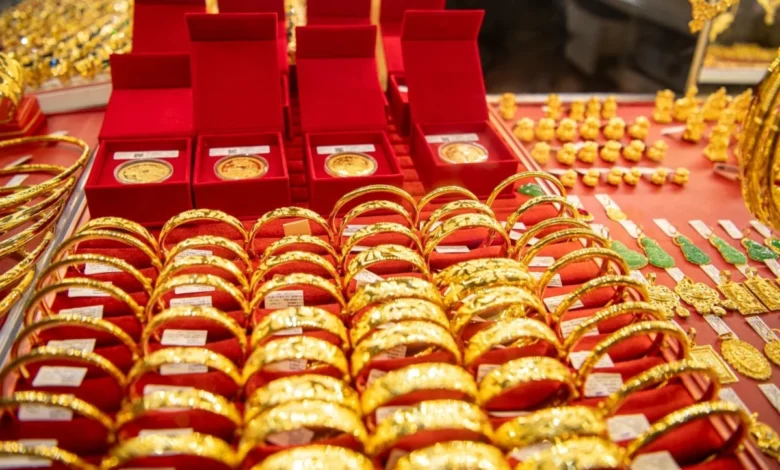
The global gold market experienced a significant correction during the latest trading session in New York, as robust U.S. economic indicators prompted a sharp decline in the price of the precious metal. Investors are recalibrating their portfolios in response to data from the Bureau of Economic Analysis (BEA), which revealed that U.S. Gross Domestic Product (GDP) growth for the third quarter of 2026 surpassed market expectations. This surge in economic activity, coupled with persistent inflationary signals, has strengthened the U.S. Dollar and pushed Treasury yields higher, creating a challenging environment for non-yielding assets like gold.
As of the latest market update on October 30, 2026, spot gold was trading near the $4,031 per ounce mark, reflecting a decline of $30 from previous sessions. Futures contracts for December 2026 have similarly retreated, hovering around $4,039 per ounce. This downward pressure underscores a broader shift in market sentiment as traders weigh the likelihood of continued monetary tightening by the Federal Reserve.
Economic Backdrop and GDP Growth Figures
The recent decline in gold prices is primarily anchored in the unexpected resilience of the United States economy. According to the Bureau of Economic Analysis, the U.S. GDP grew by 3.4% during the third quarter of 2026. This performance significantly outperformed the 2.2% growth rate recorded in the second quarter and comfortably exceeded the 3.2% consensus forecast provided by leading economic analysts.
The primary drivers of this expansion have been identified as robust private investment, consistent consumer spending, and increased government outlays. While such growth is generally considered a positive indicator for the broader economy, its impact on the commodities market—specifically gold—has been inverse. Gold, which traditionally serves as a "safe-haven" asset during periods of economic uncertainty, tends to lose its luster when the economy demonstrates strong growth, as capital shifts toward higher-yielding assets such as equities and corporate bonds.
Inflationary Trends and the PCE Index
Central to the market’s current volatility is the behavior of the Personal Consumption Expenditures (PCE) price index, the Federal Reserve’s preferred measure of inflation. The data for the third quarter showed a 2.5% increase in core PCE, which, while lower than the 3.3% observed in the second quarter, still outpaced the 2.4% forecast by market economists.
For the month of September alone, core PCE rose by 0.3%, aligning perfectly with market expectations and matching the figures recorded at the end of the second quarter. This persistence in inflationary pressure, despite the Federal Reserve’s restrictive monetary policy, has forced institutional investors to reconsider their positions on interest rates. The prevailing concern is that if inflation remains sticky, the central bank will have little choice but to maintain or increase borrowing costs to ensure price stability.
Chronology of Recent Market Sentiment
The current market environment follows a series of high-stakes policy decisions and data releases that have dictated the trajectory of gold prices:
- Mid-October 2026: Markets began pricing in a more hawkish stance from the Federal Reserve, as initial indicators suggested GDP growth would remain elevated.
- October 28, 2026: The Federal Reserve concluded its scheduled policy meeting, opting to leave interest rates unchanged. However, the accompanying commentary left the door open for further adjustments.
- October 29, 2026: The Bureau of Economic Analysis released the third-quarter GDP and PCE figures. The "better-than-expected" nature of these reports triggered an immediate sell-off in gold.
- October 30, 2026: Markets opened with gold struggling to maintain its footing near the $4,000 psychological support level, as traders increased the probability of a rate hike in December to approximately 83%.
Implications for Monetary Policy
Following the most recent policy meeting, the Federal Reserve’s Federal Open Market Committee (FOMC) has maintained a cautious but vigilant posture. Despite the pause in rate hikes, the market is increasingly convinced that the central bank may implement one final increase before the end of the year to combat the stubborn nature of current inflation levels.
The correlation between interest rates and gold is a foundational element of modern financial theory. Because gold does not pay dividends or interest, its relative attractiveness diminishes when the opportunity cost of holding the metal increases. With 10-year U.S. Treasury yields holding steady around the 5% threshold, investors are finding more reliable returns in government debt. Furthermore, the strengthening of the U.S. Dollar, which acts as the global pricing mechanism for gold, has added further downward pressure on the metal’s value.
Broader Market Impacts and Global Energy Prices
Beyond the U.S. domestic data, the energy sector has also contributed to the current market climate. Tension in the Strait of Hormuz and the ongoing complexities of U.S.-Iran relations have kept energy markets on edge. Brent crude prices have seen a slight retreat to approximately $114 per barrel, while West Texas Intermediate (WTI) has dipped to around $101 per barrel.
While lower oil prices typically assist in tempering inflation—thereby providing potential support for gold—the overarching narrative of a strong U.S. economy currently dominates market sentiment. Investors are now turning their attention toward the upcoming policy decisions from the European Central Bank (ECB) and the Bank of Japan (BOJ). These institutions, which have their own mandates to balance, are expected to introduce further volatility to the global financial landscape. Analysts suggest that if the ECB or BOJ adopts a hawkish stance, it could lead to significant currency fluctuations, which would further complicate the valuation of gold in international markets.
Analysis of Investor Behavior
The current "wait-and-see" approach among institutional investors is a direct consequence of the divergence between the Fed’s projections and the actual economic data. Financial analysts note that the current decline in gold prices is a rational response to the shift in real interest rates. As long as the U.S. economy continues to grow at a pace that exceeds the Fed’s long-term inflation targets, the path of least resistance for gold remains downward.
However, some market observers caution against viewing the current correction as a long-term trend reversal. If the "soft landing" narrative fails and growth stalls significantly in the fourth quarter, or if geopolitical tensions in the Middle East escalate unexpectedly, gold could quickly regain its status as a primary hedge. For now, the metal remains in a consolidation phase, trapped between the pull of economic growth and the push of monetary policy.
Conclusion and Outlook
As of late October 2026, the gold market stands at a critical juncture. The combination of strong U.S. GDP growth and persistent inflation has effectively reset expectations for the remainder of the year. While the immediate price action is negative, the long-term outlook for gold remains contingent on whether the Federal Reserve can successfully navigate the fine line between suppressing inflation and inducing an economic downturn.
Market participants are advised to monitor the upcoming December FOMC meeting with particular focus, as the decision to raise rates will likely be the primary catalyst for the next significant move in gold prices. Until then, investors should expect continued volatility as global markets adjust to the reality of a resilient U.S. economy operating under a tight monetary regime. The focus remains on the interplay between government spending, consumer demand, and the central bank’s commitment to maintaining price stability in an increasingly unpredictable global environment.
Related posts: