Vehicle maintenance and repair costs frequently represent a significant financial burden for automobile owners. Modern vehicles are complex machines equipped with intricate computer networks, advanced safety systems, and tightly packaged powertrains, making accurate diagnosis a specialized task. When mechanical issues arise, vehicle owners typically rely on authorized dealerships for guidance, trusting that factory-trained technicians will provide accurate assessments. However, a recent case highlighted by automotive content creators has brought renewed attention to the practice of diagnostic overreach, where vehicle owners are advised to replace costly components that remain entirely functional.
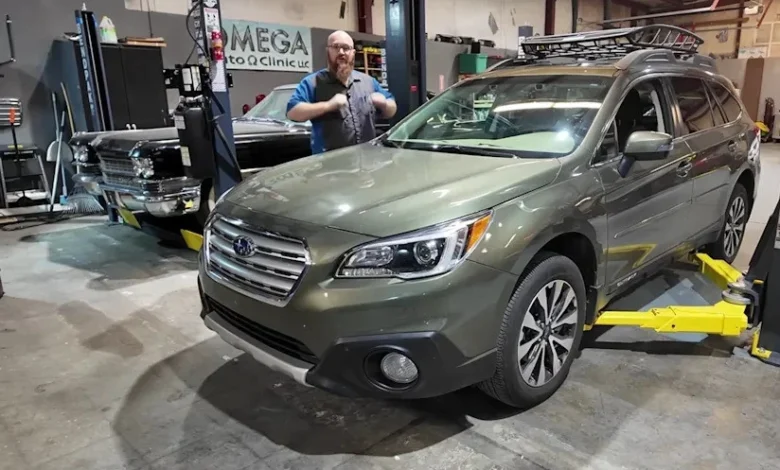
The incident centers on a 2017 Subaru Outback owned by a retired individual residing in the United States. With an odometer reading of 61,244 miles—roughly equivalent to 98,600 kilometers—the midsize crossover wagon was generally perceived to be in commendable mechanical condition, having been subjected to regular maintenance routines throughout its operational life. Despite its solid overall health, the owner began noticing two distinct vehicular anomalies: a persistent metallic clunking sound during transit and an underlying chassis vibration occurring at highway speeds. Seeking professional guidance, the owner transported the vehicle to an authorized Subaru dealership for a comprehensive inspection.
Upon completing their diagnostic evaluation, dealership technicians presented the owner with an extensive and expensive list of recommended repairs. The estimated service invoice included the replacement of all rubber coolant hoses connected to the radiator, the heating system lines, and the engine and transmission mounts. Because these components are labor-intensive and require specialized parts, tackling the dealership’s complete list would have resulted in a repair bill running into thousands of dollars. Unconvinced by the necessity of replacing so many major components on a well-maintained vehicle, the owner decided to seek a second opinion before committing financial resources to the suggested work.
To obtain an independent evaluation, the owner brought the Subaru Outback to Car Wizard, an independent automotive repair and diagnostic facility operating in the United States. The inspection process was documented and later shared on the facility’s popular YouTube channel before being analyzed by automotive publications in mid-November. This independent garage specializes in verifying diagnostic accuracy and identifying root causes of mechanical failures, offering a transparent alternative to dealership service centers.
Independent Garage Inspection Debunks Dealership Recommendations
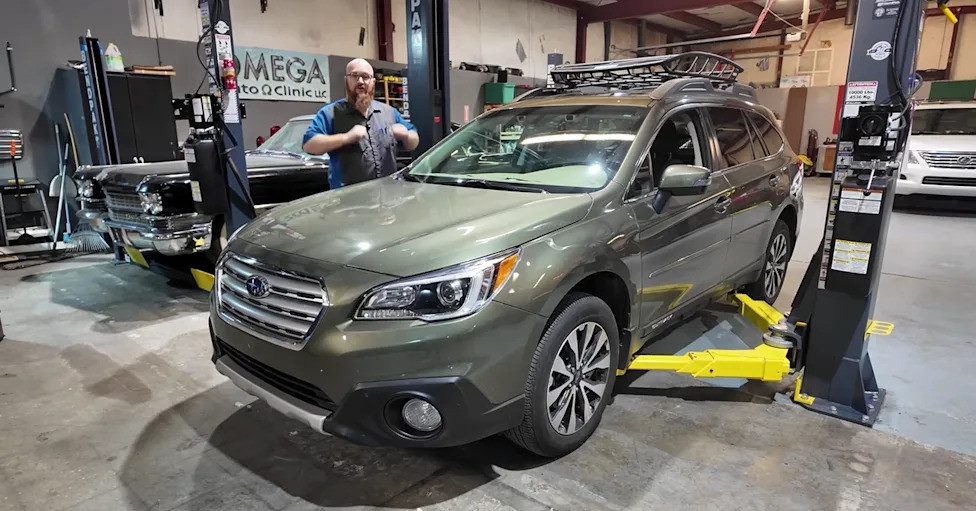
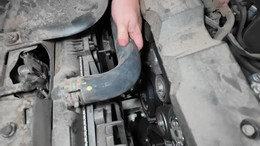
Upon receiving the 2017 Subaru Outback, the independent technician initiated a thorough examination of the specific components flagged by the authorized dealership. The initial focus centered on the engine cooling system hoses. Although the engine compartment exhibited standard accumulation of dust and minor grime, a tactile inspection of the rubber lines revealed that they remained soft and retained excellent elasticity. There were no visible signs of dry rot, structural degradation, or coolant seepage that would justify preemptive replacement. The independent technician expressed professional bewilderment at the dealership’s recommendation, concluding that the coolant hoses possessed plenty of remaining operational lifespan.
Following the under-hood inspection, the vehicle was elevated on a hydraulic lift to evaluate the condition of the engine and transmission mounts. These components are critical for isolating engine vibrations from the vehicle’s passenger cabin, and their failure typically results in excessive movement and harshness. During visual observation, the mounts showed no catastrophic signs of structural failure or fluid leaks. To confirm their operational integrity under load, the technician conducted a dynamic test while the engine was running, shifting systematically between drive and reverse while observing the displacement of the powertrain assembly.
The evaluation demonstrated that the engine and transmission mounts successfully maintained smooth driveline restraint without excessive shifting. The independent mechanic concluded that the factory mounts remained in optimal working condition, possessing no clear justification for replacement. This finding directly contradicted the dealership’s earlier assessment, sparing the vehicle owner from incurring unnecessary expenses on major drivetrain components.
Uncovering the True Culprits: Suspension and Braking Anomalies
With the dealership’s primary repair suggestions systematically ruled out, the independent repair team shifted their focus toward isolating the root causes behind the owner’s initial complaints: the metallic clunking noise and the highway speed vibrations. During a road test, the technician described the acoustic phenomenon as resembling a tin box filled with loose bolts colliding against one another when traversing uneven road surfaces.
A meticulous inspection of the braking system revealed the actual source of the noise. The vehicle’s brake calipers were found to have excessive play because the sliding guide pins had worn down over time. Guide pins are essential components designed to allow brake calipers to move smoothly into proper alignment during braking maneuvers. When these pins experience wear, the brake calipers can shift laterally and rattle when the vehicle negotiates rough pavement or potholes. The independent mechanic demonstrated this loose movement manually to illustrate how the caliper vibration generated the metallic clunking sound reported by the owner, proving definitively that the issue originated in the braking hardware rather than the engine or transmission mounts.
Addressing the Highway Speed Vibration
In addition to the clunking noise, the Subaru Outback suffered from a persistent vehicle vibration occurring at speeds between 65 and 70 miles per hour, equivalent to approximately 105 to 113 kilometers per hour. The technician confirmed that this vibrational frequency remained unchanged regardless of whether the driver applied the brakes or adjusted the steering wheel position.
Following a comprehensive assessment of the wheel assemblies, the independent garage identified the true culprit: one or more wheels had lost their dynamic wheel balance. Resolving this issue required a simple wheel balancing procedure rather than the replacement of complex drivetrain or suspension components. The technician noted that had the owner complied with the dealership’s initial recommendations, they would have spent a substantial sum of money while leaving the primary symptoms completely unaddressed.
Financial Implications and Comparative Cost Analysis
A detailed look at the financial implications of this case underscores the financial risks vehicle owners face when dealing with unverified diagnostic recommendations. According to reference data compiled from automotive service platforms in the United States, executing the complete set of repairs recommended by the dealership would have required an expenditure ranging between 1,746 and 2,041 USD—approximately 46 million to 54 million Vietnamese Dong—covering both parts and labor.
Breaking down the individual components provides additional context regarding standard maintenance pricing. Data from automotive service platforms such as YourMechanic indicates that the average cost to replace engine or transmission mounts on a Subaru Outback is approximately 405 USD, comprising roughly 149 USD for parts and 256 USD for labor. Meanwhile, aftermarket parts suppliers such as Go-Parts estimate that replacing transmission mounts for Outback models spanning the 2016 through 2024 model years costs between 230 and 370 USD.
Furthermore, automotive valuation and research publications provide varying estimates for cooling system maintenance. Kelley Blue Book references an estimated cost range of 538 to 618 USD for radiator coolant hose replacements, while RepairPal calculates that replacing heater core hoses in the United States averages between 573 and 648 USD. Combined with the labor rates associated with dealership service bays, the total estimated out-of-pocket expenses easily surpass the two-thousand-dollar threshold.
Broader Industry Implications and Consumer Takeaways
This incident serves as a case study in the importance of consumer advocacy and critical evaluation within the automotive repair sector. Independent mechanics and automotive content creators frequently emphasize that vehicle owners should exercise caution when presented with expensive, preemptive repair lists, particularly when vehicles exhibit symptoms that do not directly correlate with the components flagged for replacement.
The owner of the 2017 Subaru Outback expressed immense satisfaction with their decision to seek a second opinion before authorizing any work. By taking the vehicle to an independent repair facility, the owner successfully diagnosed the actual mechanical issues—worn brake caliper guide pins and unbalance wheels—while avoiding thousands of dollars in unnecessary repairs. As of reporting, representatives for the authorized Subaru dealership in question have not issued a public statement or response regarding the diagnostic discrepancy highlighted in the viral repair video. Industry analysts suggest that transparency, consumer education, and independent verification remain the most effective defenses against inflated repair bills in an increasingly complex automotive market.
Related posts: