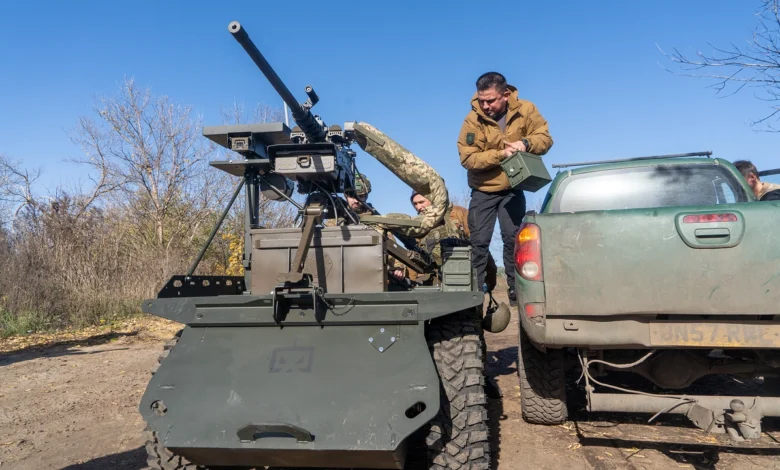
The modern battlefield in Ukraine has become a testing ground for cutting-edge robotics, where unmanned ground vehicles (UGVs) are increasingly deployed to perform high-risk missions—ranging from medical evacuations to logistical support. However, these technological advancements have inadvertently created a new, dangerous paradox: while drones are designed to save lives by removing soldiers from the immediate line of fire, the maintenance and operational requirements of these machines frequently force personnel to venture into the most lethal zones of the front line.
The Human Cost of Automated Logistics
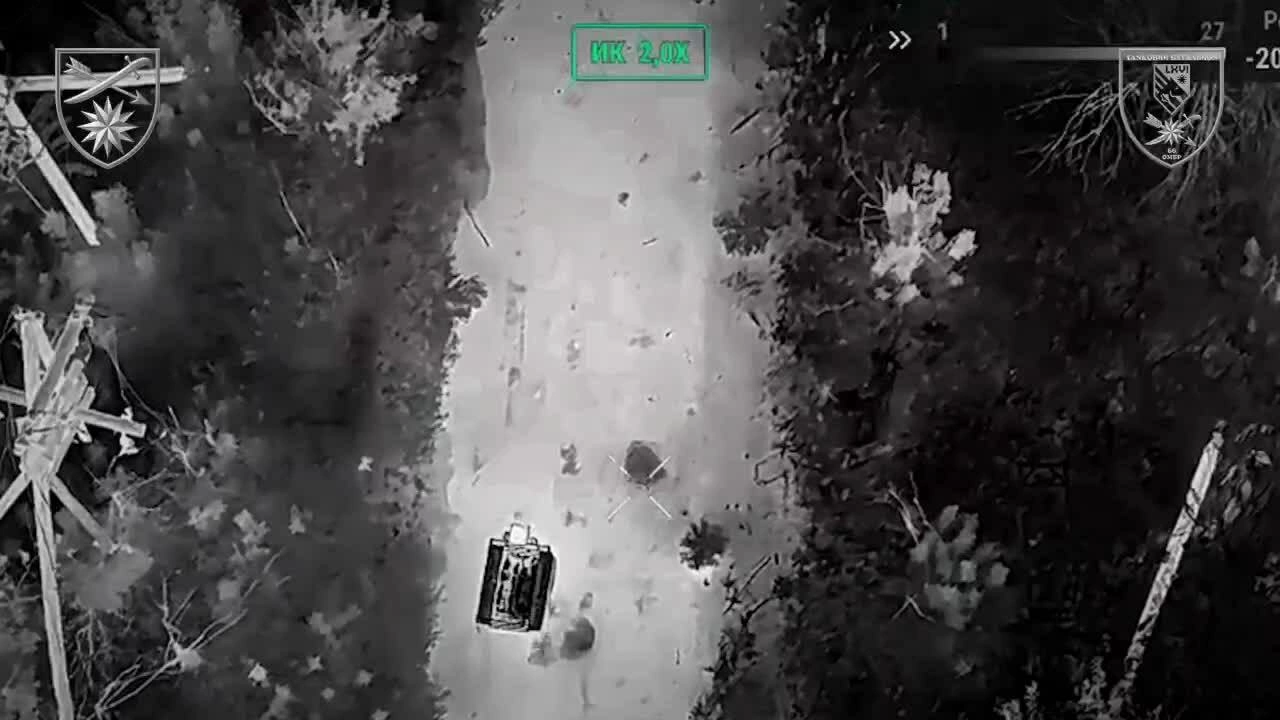
Recent footage released on October 30 by the 66th Mechanized Brigade of the Ukrainian Armed Forces underscores this grim reality. The video depicts a Tarhan-200 UGV attempting to approach wounded soldiers. Despite coming under heavy fire from Russian forces, the machine continues its mission, eventually reaching the injured personnel. While the UGV was eventually neutralized by enemy fire, the wounded soldiers were reportedly evacuated by a secondary unit.
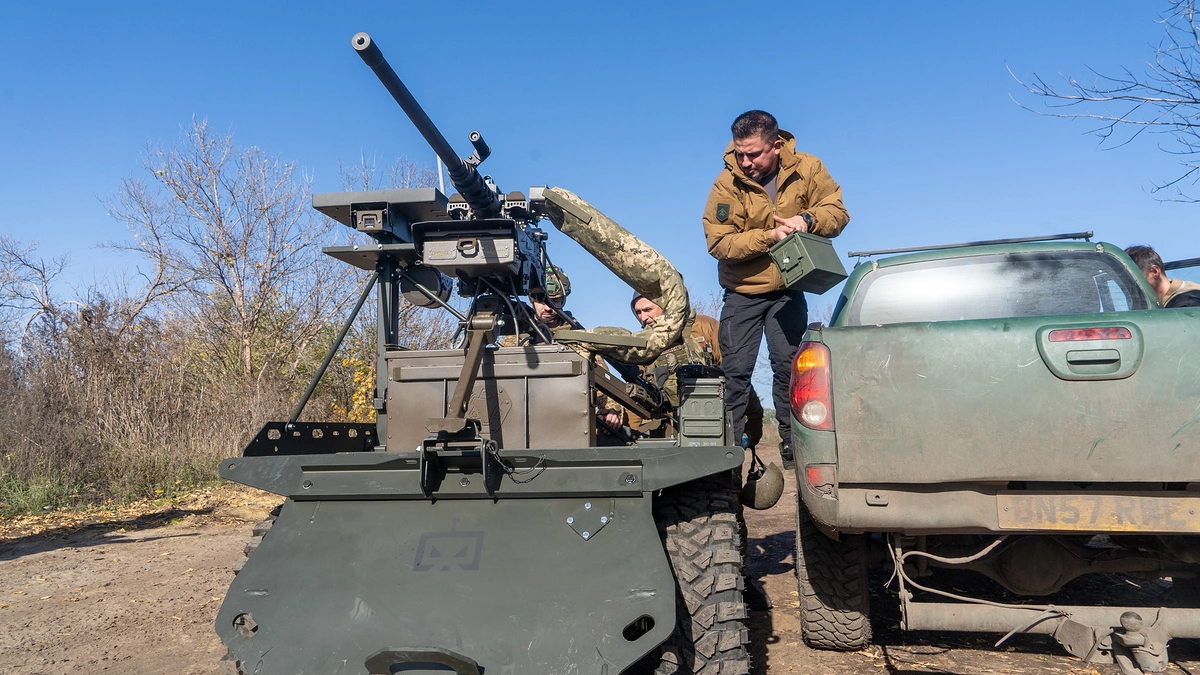
This incident illustrates the "last-mile" problem in robotic warfare. While the technology allows operators to control equipment from dozens of kilometers away, the reality of the front line demands a physical presence for deployment, battery replacement, and field repairs. Oleksandr Yabchanka, a unit leader within Ukraine’s 1st Separate Assault Battalion, admits that human involvement in UGV operations remains an unavoidable necessity. "You cannot simply leave a broken machine on the battlefield," Yabchanka explained. "There must be someone there to swap batteries, perform maintenance, and fix technical glitches. This is the inescapable reality of current robotic warfare."
Chronology of Robotic Deployment in Ukraine
The integration of UGVs into the Ukrainian military has accelerated rapidly since the onset of the conflict. In the early months of 2022, the use of drones was almost exclusively limited to aerial surveillance and loitering munitions. By late 2023, the focus shifted toward ground-based systems as both sides sought to minimize personnel exposure in trench warfare.
- Early 2023: Introduction of remote-controlled weapon stations and light, wheeled UGVs for munition delivery.
- Late 2023: Expansion of UGV roles to include casualty evacuation (CASEVAC) and mine-laying operations.
- Mid-2024: Increased frequency of "swarm" testing and AI-integrated navigation, allowing machines to traverse rough, crater-filled terrain.
- October 2024: Documentation of advanced UGV recovery missions under direct fire, highlighting both the resilience and the vulnerability of current systems.
Technical Challenges and Operational Realities
Despite the rapid development of platforms like the Tarhan-200, the technical maturity of these systems is still in its infancy. David Roberts, CEO of ARX Robotics, notes that while some modular UGVs can change configurations in mere seconds—switching from a supply hauler to a medevac platform—the reliance on stable communication links remains a critical bottleneck.
The environment in which these robots operate is characterized by extreme electromagnetic warfare (EW). Both Russian and Ukrainian forces utilize sophisticated jamming technology that can sever the connection between the remote operator and the machine. If a UGV loses its signal in the middle of a mission, it often becomes a "sitting duck," vulnerable to artillery or drone strikes. Consequently, human operators must often position themselves dangerously close to the front line to maintain a strong signal and ensure the equipment does not fall into enemy hands or become completely immobilized.
The Role of Domestic Industry
Ukraine’s defense sector has pivoted toward a "fast-fail" development cycle. Companies like DevDroid are under constant pressure to produce systems that can withstand harsh environments and the constant threat of electronic warfare. Their products are frequently returned to the factory or mobile repair shops for updates after only a few missions.
"The equipment has to work in conditions that would destroy most commercial hardware," a representative from a defense startup noted. "We aren’t just building robots; we are building disposable assets that need to be smart enough to survive, but cheap enough to lose."
This sentiment is echoed by Dmytro Zhluktenko, an analyst with the 413th Unmanned Systems Battalion. He points out that satellite connectivity has allowed pilots to operate from virtually anywhere, yet the "ground-truth" requirement remains. "You can fly a drone from a bunker in Kyiv, but you still need a soldier in the dirt to deploy it, load it, and retrieve it when the battery dies or the software glitches," Zhluktenko stated.
Strategic Implications and Future Outlook
The strategic goal for the Ukrainian military is to eventually reach a level of autonomy where the human-in-the-loop requirement is minimized. Current research is focusing on "edge computing," where the robot makes its own navigational decisions based on onboard sensors rather than relying on a constant stream of data from an operator.
There have been notable breakthroughs. Some units have reported successful supply missions covering nearly 20 kilometers, conducted almost entirely autonomously. These missions represent the "holy grail" of robotic logistics: the ability to sustain forward units without putting a single human at risk.

However, the path forward is paved with hurdles. The industry is currently struggling with:
- Power Density: Battery life remains a limiting factor, necessitating frequent, high-risk retrieval missions.
- Terrain Navigation: Algorithms capable of navigating the mud and craters of Eastern Ukraine are still struggling to match the efficiency of a seasoned infantryman.
- Cost-to-Benefit Ratio: If the UGV is as expensive as the supplies it carries, the tactical benefit is neutralized.
Conclusion: The Human-Machine Interface
The paradox of the "life-saving drone" is that it requires a human to risk their life to manage the very technology meant to protect them. As Mykyta Rozhkov, business development director at Frontline Robotics, suggests, the future of the battlefield will be defined by the successful integration of autonomous functions.
"We need software solutions that allow these systems to perform more complex tasks independently," Yabchanka concluded. "Until we reach a point where the robot can return, recharge, and redeploy on its own, we are effectively just adding a new, complex layer of maintenance to an already exhausted infantry force."
As the conflict continues, the rapid iteration of UGV technology serves as a testament to both human ingenuity under pressure and the brutal, unforgiving nature of modern warfare. Whether these machines will eventually succeed in removing humans from the deadliest zones remains to be seen, but for now, they remain a vital, albeit high-maintenance, part of the Ukrainian tactical arsenal.