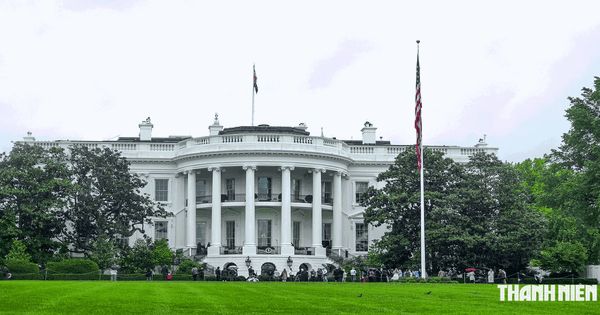
US President Donald Trump Announces Impending End to 4 Billion Dollar Annual Military Aid to Israel

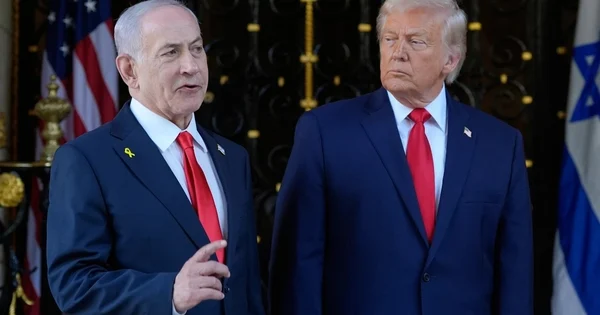
In a significant policy pivot that has sent shockwaves through international diplomatic circles, United States President Donald Trump announced on November 3, 2026, that his administration intends to terminate the long-standing annual military aid package to Israel, valued at approximately $4 billion. The announcement, delivered during a wide-ranging interview with Fox News amid the backdrop of US midterm elections, marks a potential watershed moment in the decades-old strategic alliance between Washington and Tel Aviv.
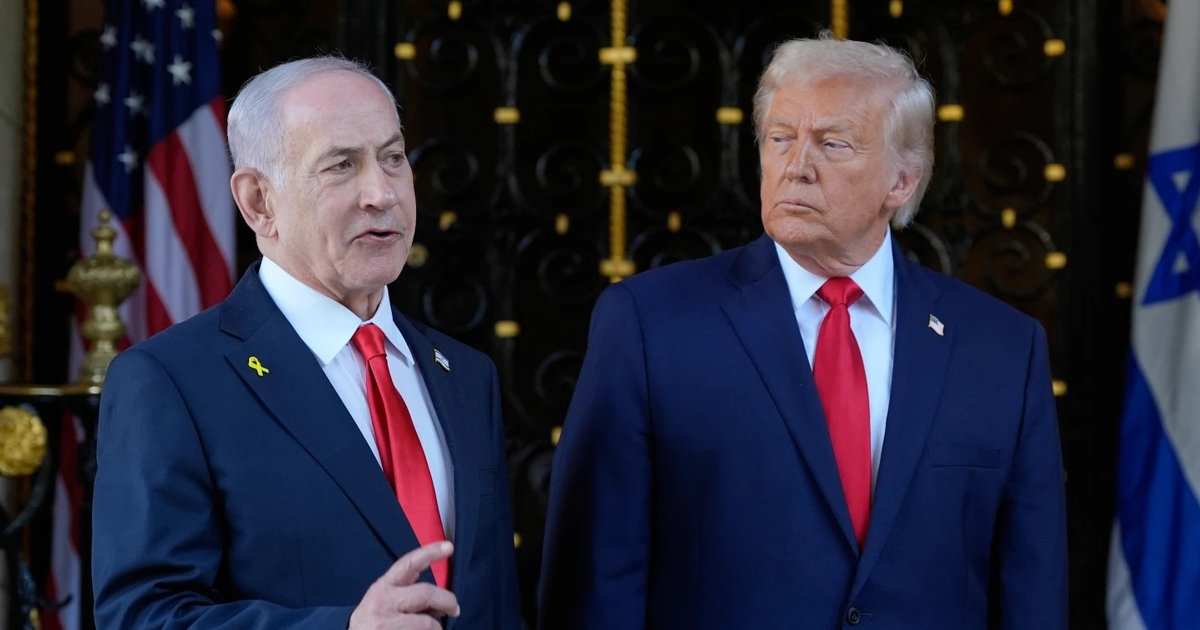
President Trump stated that he and Israeli Prime Minister Benjamin Netanyahu reached a mutual understanding regarding the cessation of these funds, with the cutoff scheduled for the end of 2027. According to the President, the decision stems from a belief that Israel has evolved into a sufficiently prosperous and successful nation, rendering continued US financial assistance redundant and a potential waste of American taxpayer dollars.
The Strategic Shift: Context and Rationale
For decades, the United States has served as Israel’s primary security guarantor, providing billions of dollars in military assistance—a cornerstone of Middle Eastern geopolitical stability. The current aid framework, primarily governed by a 10-year Memorandum of Understanding (MOU), was designed to ensure Israel maintained a "Qualitative Military Edge" (QME) over its regional adversaries.
During the interview, President Trump characterized the decision as a natural evolution of the US-Israel relationship. "We provide Israel with $4 billion every year, including military hardware and cash, but they don’t need it anymore," Trump noted. "They have become a very successful nation. Providing further aid is simply wasteful."
The President emphasized that the initiative was not a unilateral imposition but rather a collaborative decision reached after consultations with Prime Minister Netanyahu. He was quick to qualify that while direct annual financial subsidies would end, the US would remain open to facilitating arms sales and providing targeted assistance should Israel face existential threats or specific security requirements in the future.
Chronology of the 10-Year Security Pact
To understand the weight of this decision, it is necessary to look at the existing framework that has governed military cooperation. The current agreement, signed under the Obama administration in 2016 and set to expire in September 2028, provides Israel with $3.8 billion annually. The core mandate of this agreement requires that the vast majority of these funds be utilized for the procurement of military equipment produced within the United States, effectively serving as a domestic industrial subsidy for the US defense sector while bolstering Israeli defense capabilities.
The history of this relationship includes:
- 1948–1970s: Initial limited military support transitioned into a strategic partnership following the 1967 Six-Day War and the 1973 Yom Kippur War.
- 1980s–2000s: Institutionalization of annual military financing, often tied to the Camp David Accords and subsequent peace treaties.
- 2016: The Obama-Netanyahu administration finalized a historic 10-year, $38 billion military aid package, the largest of its kind in US history.
- 2023–2025: A surge in emergency military funding following the eruption of the conflict in Gaza, with reports indicating at least $21.7 billion in additional support provided during this period.
- November 2026: Announcement of the intent to terminate the annual aid commitment by late 2027.
Discrepancies and Official Responses
The announcement has met with a complex reception, as observers note potential contradictions between the President’s statement and the legal framework of existing agreements. The Times of Israel and other analysts have pointed out that the current MOU does not technically expire until September 2028. Furthermore, while Prime Minister Netanyahu has previously expressed a long-term goal of weaning Israel off US military aid—favoring a gradual reduction to avoid economic shock—the sudden nature of President Trump’s announcement suggests a departure from the previously discussed "gradual tapering" strategy.
As of the time of reporting, the office of Prime Minister Benjamin Netanyahu has maintained a calculated silence, offering no formal comment on the President’s remarks. This reticence is viewed by diplomatic analysts as a sign of high-level deliberation within the Israeli security cabinet, which must now assess the economic and strategic ramifications of losing approximately 15–20% of its annual defense budget.
Economic and Military Implications
The cessation of $4 billion in annual aid would force a significant restructuring of the Israel Defense Forces (IDF) procurement strategy. Currently, the aid is primarily used for:
- FMS (Foreign Military Sales): Purchasing advanced US-made platforms such as the F-35 Joint Strike Fighter.
- Missile Defense: Sustaining the Iron Dome and David’s Sling interceptor batteries.
- R&D Cooperation: Joint ventures between US and Israeli defense contractors, which often lead to technological breakthroughs beneficial to both militaries.
If the funding is terminated, Israel will likely need to significantly increase its own defense spending as a percentage of GDP, which could put pressure on social programs and infrastructure projects. Conversely, for the US, the termination of this aid could provide a fiscal "win" in an era of high national debt, though it risks alienating a critical regional ally and potentially shifting the balance of power in a volatile Middle East.

Broader Geopolitical Analysis
The timing of this announcement, coinciding with the US midterm elections, suggests a political strategy aimed at a domestic audience increasingly skeptical of foreign interventionism. President Trump’s "America First" doctrine has consistently questioned the necessity of long-term international financial commitments.
However, the ripple effects are significant. Regional neighbors, including Arab states that have normalized relations with Israel under the Abraham Accords, will be closely watching how this decision affects Israel’s ability to maintain its military deterrent. If Israel is perceived as weaker or less capable of projecting power, regional security architectures—such as the integrated air defense networks—could face new challenges.
Moreover, the move sets a precedent for how the US might re-evaluate other long-term security commitments globally. By framing the withdrawal as a sign of the ally’s "success," the administration is creating a new metric for foreign aid: one based on the recipient’s economic self-sufficiency rather than purely strategic necessity.
Conclusion
The path forward remains fraught with ambiguity. While President Trump has signaled a clear intent, the legal and logistical transition from a state of sustained financial dependency to full Israeli self-reliance will likely require intricate negotiations. Whether this move serves to strengthen Israel’s sovereignty by detaching it from American fiscal constraints, or whether it introduces an element of unpredictability into the Middle East, remains a subject of intense debate among security experts.
As 2027 approaches, the international community will look for signs of how the US and Israel intend to navigate the termination of this historic agreement. For now, the global markets and defense sectors are bracing for a recalibration of one of the world’s most enduring and influential military partnerships. Whether this change will prove to be a localized policy shift or the beginning of a broader retreat from international financial security commitments is a question that will dominate foreign policy discourse in the coming months.