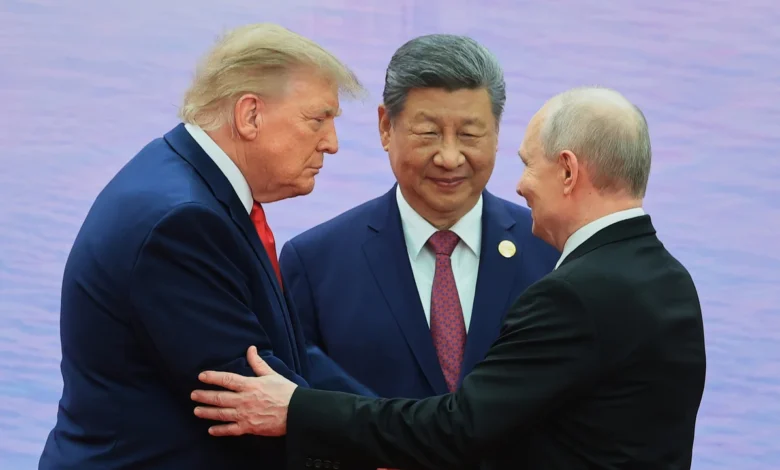
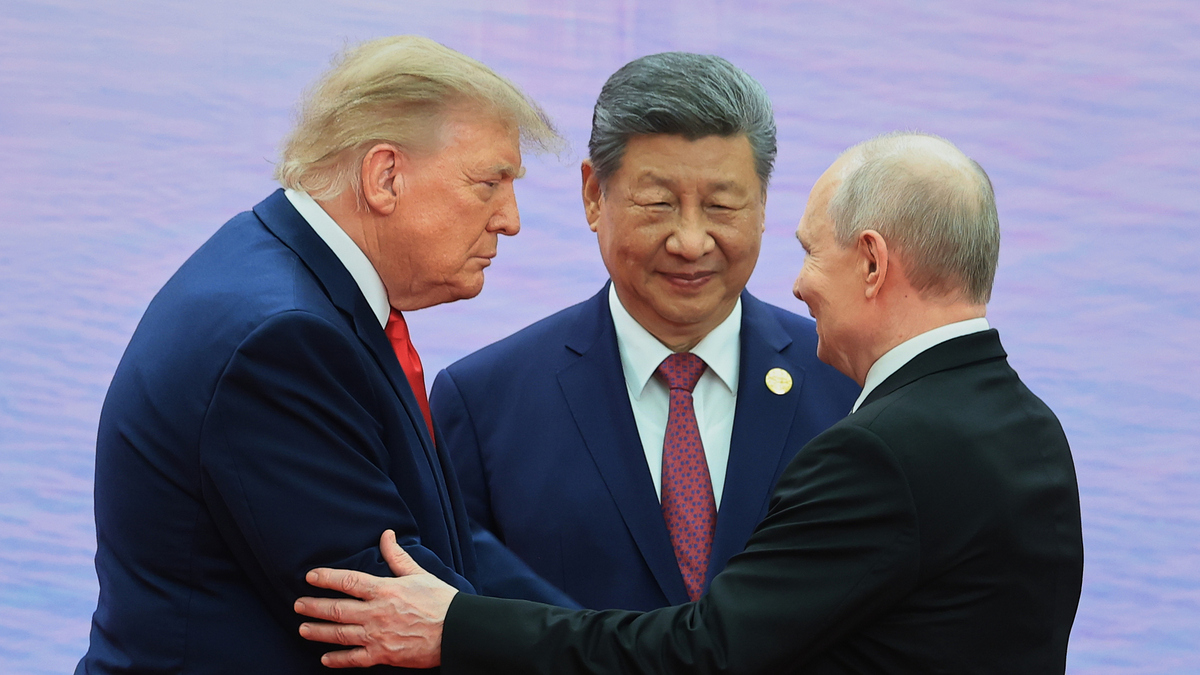
The diplomatic landscape shifted dramatically on November 19, as the leaders of the world’s three most influential nations—United States President Donald Trump, Russian President Vladimir Putin, and Chinese President Xi Jinping—convened for an unprecedented trilateral summit in the coastal city of Shenzhen. Held at the Kulan Resort, this 90-minute discussion, centered around a signature circular table, marked a historic departure from traditional bilateral diplomacy. While the meeting produced no immediate, sweeping treaties, it established a high-level framework for communication between the global powers, signaling a potential cooling of geopolitical tensions that have dominated the early 21st century.
A New Era of Trilateral Engagement
The meeting at the Kulan Resort in Shenzhen was not merely a ceremonial gesture; it represented a strategic pivot in international relations. For the first time in the modern era, the leaders of the U.S., Russia, and China sat down together to navigate the complexities of a multipolar world. The symbolism of the event was underscored by the shared recognition of the risks posed by unchecked competition.
President Xi Jinping, acting as the host, set a somber tone by invoking historical lessons. "History demonstrates that when major powers coexist harmoniously, the world enjoys peace and stability. Conversely, when they clash, the global order descends into chaos," Xi stated during the opening remarks. His emphasis on mutual respect for sovereignty and the avoidance of "red lines" served as a foundational principle for the dialogue, aiming to de-escalate the friction that has characterized the relationship between Washington, Moscow, and Beijing.
Chronology of the Diplomatic Shift
The lead-up to this summit was characterized by months of back-channel negotiations. Intelligence reports and diplomatic cables suggest that the idea of a trilateral meeting began to coalesce following a series of regional escalations that threatened to spiral into broader conflicts.
- September 2026: Initial informal discussions between senior diplomatic envoys in Geneva regarding the necessity of a tripartite mechanism to prevent nuclear proliferation and address regional energy volatility.
- October 2026: Final confirmation of the meeting in Shenzhen, with security protocols and agenda-setting finalized by lead negotiators.
- November 18, 2026: Arrival of the three delegations in Shenzhen, with preliminary staff-level meetings held to harmonize expectations.
- November 19, 2026: The historic 90-minute plenary session at the Kulan Resort, followed by a joint statement on nuclear non-proliferation.
Addressing the Nuclear Threshold
While the joint statement issued after the summit lacked specific enforcement mechanisms, it established a critical commitment to formalize a communication framework regarding nuclear weapons. The leaders reaffirmed the principle that "a nuclear war cannot be won and must never be fought." This consensus is a significant step toward institutionalizing risk reduction.
Analysts have long warned that the breakdown of Cold War-era arms control treaties, such as the INF Treaty and the expiration of START-related frameworks, left a dangerous vacuum. By creating a direct line of communication, the three leaders are attempting to mitigate the risks of miscalculation. John B. Emerson, former U.S. Ambassador to Germany, noted that when leaders of the three nations sit at the same table to discuss reducing the volatility of nuclear weapons, "it is always a moment of profound significance."
Data-Driven Context: The Global Power Dynamics
To understand the weight of this meeting, one must examine the current global distribution of power. The three nations participating in the Shenzhen summit account for over 60% of global GDP and possess the world’s largest stockpiles of nuclear warheads.
| Nation | Estimated Nuclear Warheads | Defense Spending (2026 Est.) |
|---|---|---|
| United States | ~5,200 | $900 Billion+ |
| Russia | ~5,500 | $120 Billion+ |
| China | ~500 (Rapidly expanding) | $300 Billion+ |
These figures highlight the necessity of the "superpower diplomacy" exhibited in Shenzhen. The fiscal burden of an unbridled arms race, combined with the instability of global energy markets—which remain heavily influenced by the policies of these three states—provided the economic impetus for the summit.
The Thucydides Trap and Beyond
A recurring theme among political scientists has been the "Thucydides Trap," the theory that conflict is inevitable when a rising power threatens to displace an established ruling power. In the context of the U.S.-China-Russia dynamic, this has often been interpreted through a zero-sum lens.
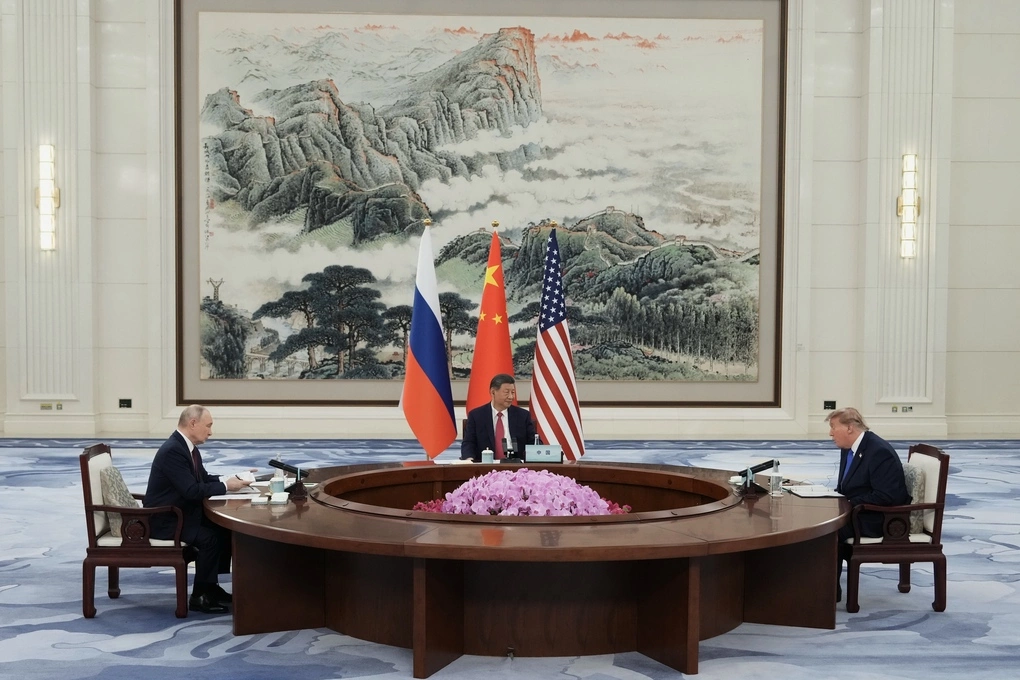
However, the Shenzhen meeting suggests a shift toward a more nuanced, albeit fragile, cooperation. Wang Wen, dean of the Chongyang Institute for Financial Studies at Renmin University, argued that the principles laid out by President Xi are designed to bypass this trap. "This approach is not aimed at forming a formal alliance, but at finding a path for major countries to manage competition and collectively stabilize the global order in a multipolar world," Wang stated.
The focus has moved away from ideological containment—a staple of Cold War policy—toward a model of "competitive coexistence." By defining clear red lines, the leaders are attempting to prevent regional proxy conflicts, such as those in Ukraine or the Middle East, from escalating into a direct confrontation between the superpowers.
Reactions and International Implications
The global reaction to the summit has been a mixture of cautious optimism and skepticism.
- The Skeptics: Many Western analysts initially dismissed the meeting as a "diplomatic photo-op," arguing that without concrete binding agreements on issues like territorial integrity or human rights, the summit remains symbolic. Critics point out that the absence of specific de-escalation timelines for ongoing regional conflicts limits the practical utility of the meeting.
- The Proponents: Conversely, proponents like Daryl Kimball of the Arms Control Association view the meeting as a "starting gun" for long-term negotiations. "We need more of these diplomatic performances," Kimball remarked. "A single meeting cannot produce a breakthrough, but it can set the precedent for consistent, high-level interaction."
Ali Wyne, a senior advisor on U.S.-China relations at the International Crisis Group, emphasized that the summit represents a fundamental shift in Washington’s strategy. "The symbolic nature of this event is extremely powerful," Wyne observed. "It signals that the old binary view of global politics is no longer sufficient to address the complexities of modern threats."
Looking Ahead: The Future of Trilateral Diplomacy
The Shenzhen summit marks the beginning of what could be a long and arduous process of institutionalizing trilateral diplomacy. As Da Wei, director of the Center for International Security and Strategy at Tsinghua University, put it: "The three leaders and these three countries are the primary architects of the international order. Therefore, the fact that they are meeting is an unequivocally positive development."
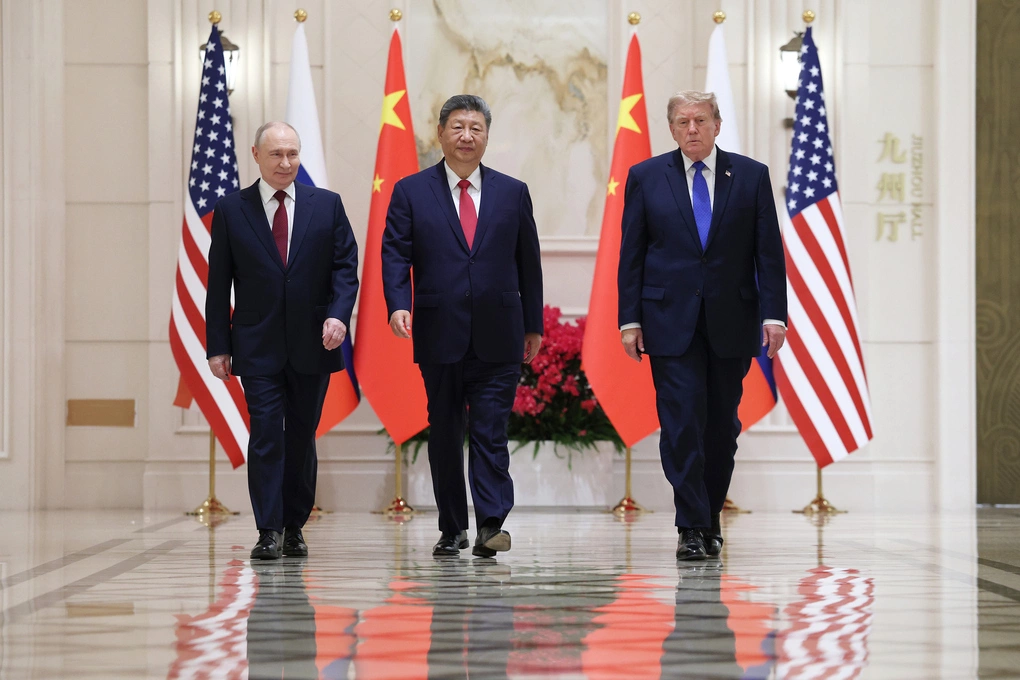
The immediate challenge for the three administrations will be translating the atmosphere of the Kulan Resort into actionable policy. This includes the establishment of working groups to monitor nuclear stockpiles, the creation of secure "hotlines" to prevent military miscalculations, and the coordination of economic policies to stabilize global energy markets.
Whether this summit leads to a lasting period of stability remains to be seen. The geopolitical differences remain vast, and the national interests of the U.S., Russia, and China are often diametrically opposed. However, by establishing a floor for their relationship, the three leaders have at least acknowledged that in an era of global volatility, the alternative to dialogue—unmitigated confrontation—is a risk that none can afford to take. The world watches with bated breath to see if the circular table in Shenzhen becomes a permanent feature of international relations or merely a fleeting respite in an increasingly fractured global landscape.