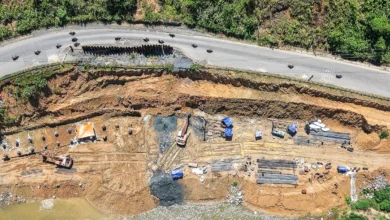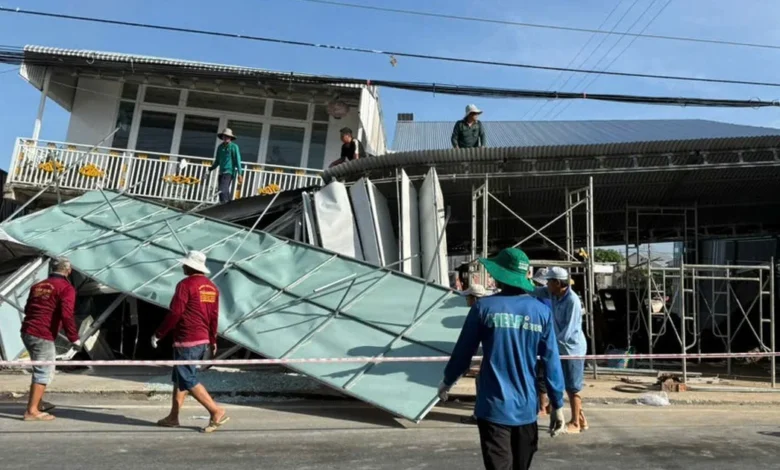
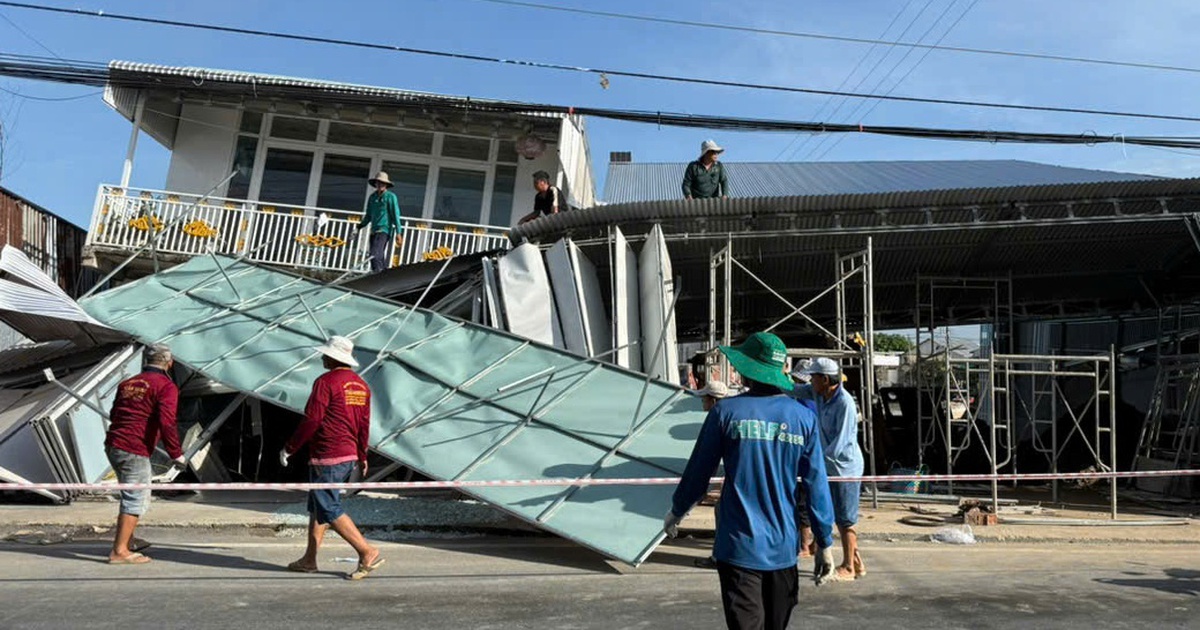
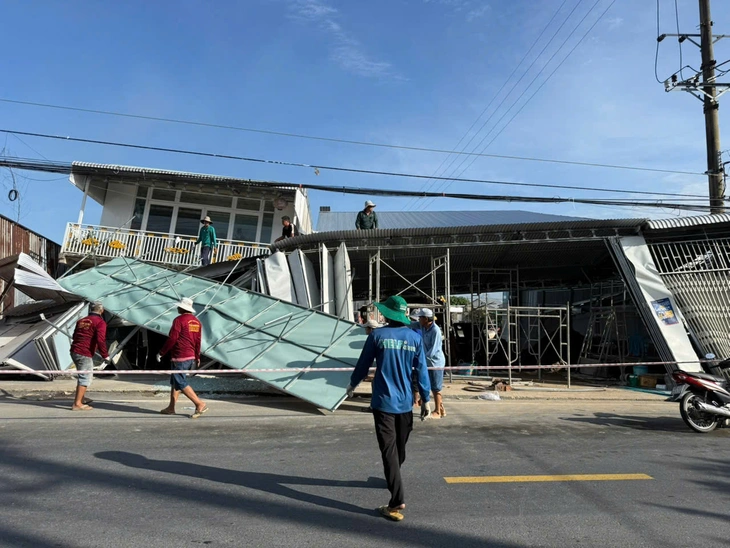
A severe landslide occurred on July 24th at the Cai San Canal, along National Highway 80, in Vinh Trinh commune, Can Tho City, resulting in extensive damage to four houses and an estimated initial loss of 2.5 billion VND (approximately $100,000 USD). Fortunately, no human casualties were reported in the incident, which struck around 9 AM local time.
The landslide affected a section of the canal approximately 35 meters in length and reached a depth of about 15 meters into the canal bank. This catastrophic event led to the complete collapse of four residential structures situated along the canal’s edge. The affected homes belonged to residents Mr. Nguyen Van Tuan, Mr. Ho Van Non, Mr. Nguyen Ngoc Minh, and Ms. Dao Thi Thuy Nhung, who is also the owner of Tuan Nhung construction materials.
The immediate aftermath saw a swift response from local authorities. The Steering Committee for Disaster Prevention and Control, Search and Rescue of Vinh Trinh commune mobilized resources to the scene. Rescue efforts focused on assisting affected residents, securing the site, and assessing the full extent of the damage. Concurrently, measures were implemented to mitigate further risks and stabilize the affected area. Efforts are also underway to help the displaced residents resume their daily lives and rebuild their properties.
Background and Context
Can Tho City, the economic hub of the Mekong Delta, is particularly vulnerable to landslides and erosion due to its extensive network of canals and waterways. The region’s geological makeup, characterized by soft alluvial soil, combined with factors such as heavy rainfall, fluctuating water levels, and the impact of upstream dam operations on sediment flow, contributes to the recurring risk of bank erosion and landslides.
National Highway 80, a vital artery connecting Can Tho City with other provinces in the Mekong Delta, traverses numerous waterways. The Cai San Canal, being a significant canal along this route, is crucial for both transportation and local livelihoods. Landslides in such strategic locations can disrupt economic activities, pose safety hazards to commuters, and necessitate substantial investment in infrastructure repair and reinforcement.
Timeline of Events
- July 24th, approximately 9 AM: A significant landslide occurred at the Cai San Canal on National Highway 80 in Vinh Trinh commune, Can Tho City. The landslide measured approximately 35 meters in length and penetrated about 15 meters into the canal bank.
- Immediate Aftermath: Four houses belonging to local residents were completely destroyed by the landslide. Initial damage estimates reached approximately 2.5 billion VND.
- Response: Local authorities, including the Steering Committee for Disaster Prevention and Control, Search and Rescue of Vinh Trinh commune, were immediately dispatched to the scene. Efforts focused on assisting residents, securing the area, and assessing the damage.
- Ongoing Efforts: Authorities are implementing measures to stabilize the affected canal bank, develop plans for rehabilitation, and provide support to the displaced families.
Supporting Data and Statistics
This incident is not an isolated one in the Mekong Delta. According to data from the Department of Water Resources, Irrigation, and Agriculture of Can Tho City, as of early 2026, there have been 232 instances of landslides or bank collapses along the city’s rivers and canals. These events have collectively impacted approximately 13.87 kilometers of riverbanks, causing complete damage to 32 houses, with 11 of these requiring complete reconstruction. The recurring nature of these events underscores the persistent environmental challenges faced by the region.
The frequency of such incidents is often exacerbated during the rainy season, which typically runs from May to October. The heavy rainfall saturates the soil, increasing its weight and reducing its shear strength, making it more susceptible to collapse. Furthermore, the dynamic nature of canal water levels, influenced by tides, rainfall, and upstream water management, can also contribute to bank instability.
Official Responses and Mitigation Efforts
In response to the Cai San Canal landslide, relevant government agencies have been actively involved. The Department of Disaster Prevention and Control, Search and Rescue of Vinh Trinh commune has been coordinating immediate relief efforts. This includes providing temporary shelter, essential supplies, and financial assistance to the affected families.
Local authorities have also emphasized the importance of ongoing monitoring and preventative measures. Residents in areas prone to landslides have been urged to remain vigilant and report any signs of instability. The city is reportedly exploring long-term solutions, which may include reinforcing canal banks with more resilient materials, improving drainage systems, and potentially relocating residents from the most high-risk zones.
Broader Impact and Implications
The landslide at Cai San Canal highlights the critical need for robust infrastructure management and climate change adaptation strategies in the Mekong Delta. The economic implications extend beyond the immediate property damage. Disruptions to National Highway 80 can impact the transportation of goods and people, potentially affecting local commerce and supply chains.
The long-term viability of communities situated along these vital waterways is a growing concern. As climate change intensifies, leading to more extreme weather events and sea-level rise, the vulnerability of the Mekong Delta to natural disasters like landslides is expected to increase. This necessitates a proactive approach to infrastructure development and land-use planning, prioritizing resilience and sustainability.
The incident also serves as a stark reminder of the delicate balance between human development and the natural environment in this ecologically sensitive region. Continuous assessment of soil conditions, water management practices, and the cumulative impact of human activities is essential to prevent future occurrences and protect the livelihoods and safety of the residents of Can Tho City and the wider Mekong Delta. The focus now shifts towards not only immediate recovery but also the implementation of effective, long-term solutions to safeguard against recurring disasters.