An Unexpected Plunge in Dong Nai: White Sedan Drives Off Road Into Local Water Body, Sparking Investigation

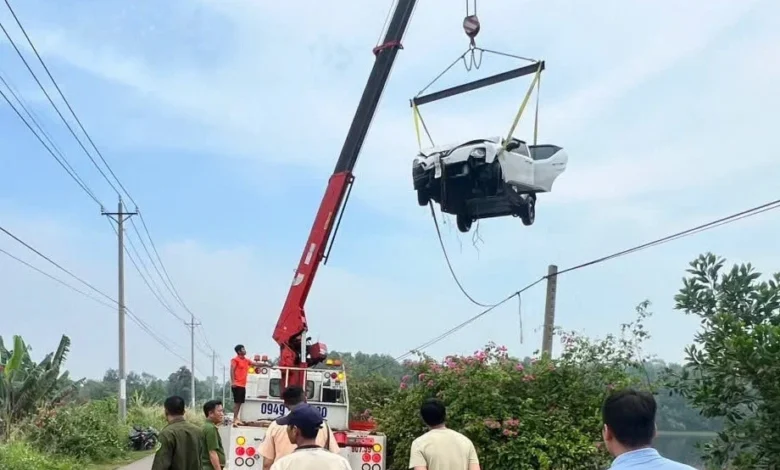
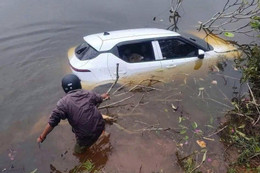
Trang An Ward Police in Bien Hoa City, Dong Nai Province, are actively coordinating with multiple specialized units and functional agencies to thoroughly investigate a bizarre traffic incident in which a white four-door sedan unexpectedly plunged into a deep body of water near the DT761 provincial roadway. The unusual occurrence, which took place within the jurisdiction of Quarter 25 in Mai Dao residential quarter, has drawn significant local attention and mobilized considerable emergency response resources. Despite the alarming nature of the accident, authorities have confirmed that no casualties or serious injuries were reported, though the vehicle sustained notable water damage before it was successfully retrieved by emergency extraction crews.
The incident underscores ongoing concerns regarding local roadside infrastructure, vehicle safety, driver attentiveness, and the various environmental hazards posed by unprotected water bodies situated dangerously close to heavily traveled regional transit corridors throughout southern Vietnam’s rapidly developing industrial provinces.
Chronology of the Incident: From Discovery to Extraction
The sequence of events began early in the morning on November 15, unfolding rapidly as local residents commenced their daily routines in Trang An Ward. At approximately 7:15 AM, bewildered pedestrians and local merchants near the DT761 roadway noticed an unusual sight: a pristine white four-door sedan, bearing a license plate registered in the coastal province of Khanh Hoa, completely submerged up to its windows in a stagnant water body adjacent to the thoroughfare.
Recognizing the severe potential for human entrapment and environmental contamination, alarmed citizens immediately contacted local emergency hotlines, prompting a swift response from law enforcement officials. The Trang An Ward Police detachment arrived at the scene within minutes to secure the perimeter, manage curious onlookers, and assess the structural stability of the embankment where the vehicle had breached the roadway boundary.
Recognizing the need for heavy mechanical assistance, the local precinct immediately requested support from specialized municipal units, including the Fire Prevention, Fighting and Rescue Police Department (PCCC&CNCH) and the Traffic Police (CSGT) Division of the Dong Nai Provincial Police. A coordinated recovery plan was rapidly formulated. Heavy-duty tow trucks, specialized rigging equipment, and professional scuba-assisted extraction personnel were deployed to the banks of the water body to formulate a safe retrieval strategy that would minimize further damage to the submerged automobile and prevent potential fluid leaks into the surrounding aquatic environment.
Before the physical extraction process could fully commence, two individuals arrived at the scene and identified themselves as the rightful owners and custodians of the distressed vehicle. The individuals were formally identified by police records as Mr. N.V.T., a 43-year-old resident of Khanh Hoa province, and Ms. N.T.T., a 41-year-old resident of Ho Chi Minh City. Upon interacting with investigating officers, the pair provided initial verbal testimony regarding the circumstances that led to the vehicle’s unexpected descent into the water body. According to their preliminary statements, the driver experienced a sudden loss of control over the steering mechanism, causing the sedan to veer off the asphalt surface and slide down the embankment into the murky depths below.
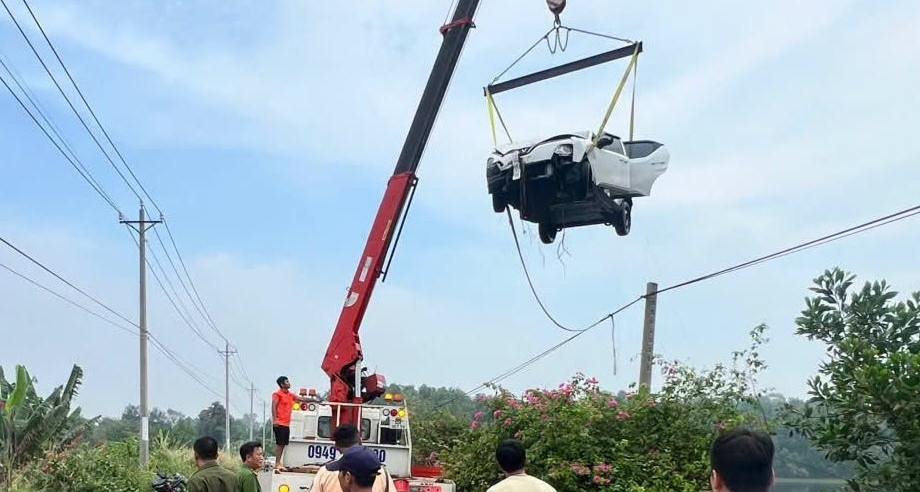
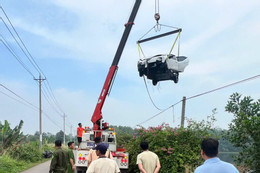
Following the initial documentation and interviews at the scene, the rescue teams executed a complex extraction operation. Using specialized winches and crane attachments, emergency personnel managed to hook the submerged Khanh Hoa-registered sedan and steadily hoist it out of the water, returning it to dry land. Following a comprehensive inspection of the interior and cargo areas, authorities confirmed with immense relief that no occupants were trapped inside at the time of the recovery operation, completely alleviating initial fears of hidden drowning casualties
.
Geographical and Infrastructural Context of Dong Nai Province
To fully understand the gravity of the Trang An Ward incident, one must examine the unique geography, rapid urbanization, and extensive transportation network defining Dong Nai Province. Situated in the Dong Nam Bo (Southeast) region of Vietnam, Dong Nai functions as a critical industrial powerhouse and a bustling logistical gateway encircling the eastern perimeter of Ho Chi Minh City. The province connects the Central Highlands and South-Central coastal provinces, such as Khanh Hoa and Lam Dong, with the nation’s principal economic centers.
Roadways such as the DT761 serve as vital arteries facilitating the transit of commercial goods, agricultural produce, and private passenger vehicles between remote rural districts and bustling urban centers. However, this rapid infrastructural expansion often juxtaposes high-speed vehicular transit routes alongside complex rural topographies, agricultural irrigation networks, natural water bodies, and artificial quarries. Many secondary roads and provincial routes traverse low-lying terrain characterized by marshes, lakes, ponds, and drainage canals that run parallel to the asphalt without adequate physical barriers, guardrails, or warning signage.
In recent years, local authorities in Bien Hoa City and surrounding districts have grappled with the complex challenge of upgrading rural and semi-urban transportation corridors to match the exponential growth in civilian automobile ownership. As more Vietnamese households transition from motorcycles to passenger sedans and multi-purpose vehicles (MPVs), municipal infrastructure faces unprecedented stress. Roadways that were historically designed to accommodate lighter, slower agricultural traffic are now routinely navigated by heavier, faster four-wheel automobiles driven by individuals who may be unaccustomed to regional topographical hazards, unfamiliar with local micro-climates, or distracted by fatigue during long-distance inter-provincial journeys.
Similar Incidents and Psychological or Environmental Factors
The unexpected plunge of the Khanh Hoa-registered sedan into the Dong Nai water body is by no means an isolated phenomenon within Vietnam’s broader transportation landscape. Over recent years, traffic authorities nationwide have recorded numerous bizarre, highly publicized incidents involving vehicles unexpectedly leaving roadways and ending up submerged in lakes, rivers, or irrigation reservoirs. These occurrences frequently stem from a diverse mix of driver error, medical emergencies, mechanical failures, adverse weather conditions, and, in some cases, severe psychological distress.
For instance, national transit archives contain records of vehicles being blown entirely off elevated coastal or rural roads by powerful seasonal windstorms and sudden squalls, such as the destructive weather patterns associated with tropical storms sweeping across central and northern provinces. In other haunting instances, drivers experiencing acute emotional trauma—such as profound grief following marital separation or severe personal crises—have intentionally driven their automobiles off embankments into isolated bodies of water, turning routine transit routes into sites of personal tragedy. Furthermore, juvenile delinquency and reckless behavioral patterns among minors have occasionally manifested in dangerous stunts, such as altercations near waterfronts resulting in victims being pushed into deep aquatic hazards.
In the specific case of the Trang An Ward incident, however, the preliminary testimonies provided by Mr. N.V.T. and Ms. N.T.T. point toward a more mundane yet equally perilous mechanical or operational failure: a sudden loss of directional control. Whether this loss of control was precipitated by a mechanical defect in the steering assembly, a sudden tire blowout, driver fatigue during a lengthy cross-country trip from Khanh Hoa, or temporary distraction remains the central focus of the ongoing police investigation.
Official Responses, Regulatory Implications, and Ongoing Investigations
In the wake of the successful vehicle extraction, the Trang An Ward Police, in close collaboration with the Dong Nai Provincial Traffic Police and rescue divisions, have intensified their investigative efforts. While the immediate crisis has been resolved without loss of human life or significant third-party property damage, regulatory agencies are obligated to establish a complete and unassailable account of the incident to address potential legal, insurance, and municipal safety implications.
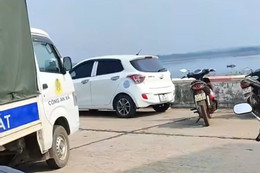
Investigators are currently conducting a forensic examination of the retrieved white sedan. Automotive experts and forensic technicians will inspect the steering mechanisms, braking systems, electronic control units, and tire conditions to verify or discount the owners’ claims of a sudden steering failure. Additionally, investigators are reviewing nearby security camera footage, dashcam recordings from passing motorists, and eye-witness accounts to reconstruct the exact trajectory of the vehicle prior to its descent into the water.
From a regulatory standpoint, the incident raises critical questions regarding shared accountability between vehicle operators and local infrastructure management boards. If the investigation confirms that the vehicle veered off the road due to driver fatigue, excessive speed, or inattention, the registered owners may face administrative penalties related to reckless driving or failure to maintain control of a motor vehicle. Conversely, if evidence suggests that inadequate road shoulders, the complete absence of protective guardrails, or deficient warning signage contributed significantly to the vehicle’s plunge, municipal civil engineering departments may face pressure to implement immediate infrastructure upgrades along the DT761 corridor.
Furthermore, insurance underwriters will closely scrutinize the official police report to determine liability and compensation payouts regarding the extensive water damage sustained by the automobile’s engine, transmission, and electrical systems. Total submersion in stagnant water typically results in catastrophic mechanical and electronic failures, often rendering modern automobiles economically unviable to repair, thereby creating significant financial burdens for the vehicle owners despite the absence of personal injuries.
Broader Safety Recommendations for Inter-Provincial Motorists
As Vietnam’s highway infrastructure continues to expand and civilian vehicle ownership rates soar, traffic safety authorities repeatedly emphasize the paramount importance of defensive driving habits, routine vehicle maintenance, and heightened vigilance when navigating unfamiliar terrain. Long-distance motorists traveling across provincial boundaries—such as those commuting between Khanh Hoa, Ho Chi Minh City, and Dong Nai—are strongly advised to adhere to established safety protocols to prevent similar accidents.

Key recommendations issued by transport safety experts include:
- Rigorous Pre-Trip Inspections: Drivers undertaking extended journeys must systematically inspect critical mechanical components, including steering linkages, brake pads, tire tread depths, and suspension systems, to minimize the risk of sudden mechanical failure at high speeds.
- Combating Driver Fatigue: Long-distance driving significantly diminishes cognitive reflexes and reaction times. Motorists are urged to schedule regular rest stops every two hours or every 100 kilometers to combat microsleeps and maintain optimal situational awareness.
- Adapting to Unfamiliar Topography: When driving through semi-rural or rapidly urbanizing provinces like Dong Nai, motorists must remain acutely aware of surrounding geographical features, including unpaved shoulders, steep embankments, and unprotected bodies of water situated close to the asphalt.
- Municipal Infrastructure Enhancements: Local civil authorities are continually encouraged to install robust crash barriers, reflective warning signs, and adequate street lighting along vulnerable stretches of provincial roadways that run parallel to deep water hazards, thereby mitigating the severity of potential run-off-road accidents.
The miraculous outcome of the Trang An Ward incident—where a major vehicular plunge concluded with zero casualties—serves as both a fortunate escape for the individuals involved and a timely cautionary tale for the wider motoring public. As the Dong Nai Provincial Police finalize their technical assessments and bring the investigation to a close, the episode remains a stark reminder of the unpredictable hazards lurking along Vietnam’s sprawling transit networks and the constant need for vigilance behind the wheel.