SGI Capital: High margin debt levels present significant risks to market stability

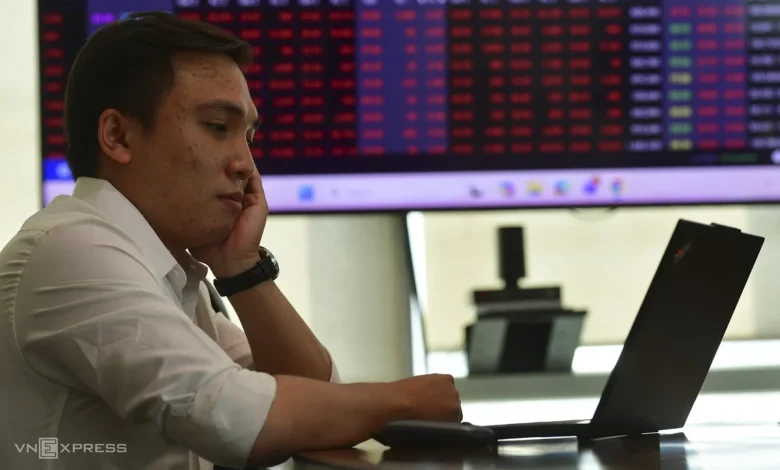
The Vietnamese stock market is currently navigating a period of heightened vulnerability as margin debt reaches record levels, sparking concerns among analysts regarding potential systemic risks. According to a recent report by SGI Capital, the investment manager behind The Ballad Fund, a significant portion of borrowed capital has been diverted away from equity investments, creating a dangerous disconnect between leverage levels and market liquidity. This phenomenon contradicts traditional investor behavior, which typically sees a reduction in leverage during periods of declining market sentiment and lower liquidity.
Data compiled from FiinTrade indicates that the total margin debt across the Vietnamese market reached approximately 457.5 trillion VND by the end of the third quarter. This figure represents a staggering 5.3% of the total market capitalization and accounts for 14.2% of the free-float shares—both of which are historic highs. Investors currently carrying this leverage are burdened with an estimated 13 trillion VND in interest payments every quarter, placing additional strain on portfolios already weakened by the recent market downturn.
A Chronology of Increasing Leverage
To understand the gravity of the current situation, one must look at the trajectory of margin debt since the post-pandemic recovery. Compared to the first quarter of 2022, the current margin debt balance is 2.5 times higher in absolute terms. While the volume of debt has surged, the cash balances held by investors at brokerage firms have simultaneously contracted by 15%, falling to 71.5 trillion VND.
This divergence suggests that the "cushion" of cash previously available to stabilize the market during volatility has evaporated. Historically, high-leverage periods were often corrected through organic market cycles. However, the current environment is complicated by the fact that nearly one-third of the total free-float shares on the Ho Chi Minh City Stock Exchange (HoSE) and the Hanoi Stock Exchange (HNX) are currently serving as collateral for these margin loans.
Structural Risks and the Liquidity Trap
The core concern voiced by SGI Capital is not merely the volume of debt, but its allocation. There is evidence that a segment of these funds is being utilized outside of the equity market. When these borrowed funds fail to generate returns in other ventures or cannot be repatriated quickly enough to meet margin calls, investors face a liquidity crisis.
When investors are unable to meet their repayment obligations, brokerage firms are forced to liquidate the collateral—the underlying stocks—to recover their capital. This creates a feedback loop: forced selling drives down share prices, which in turn triggers further margin calls for other investors whose collateral values have fallen below the required maintenance thresholds.
In recent months, the market has witnessed "floor-price" selling sessions, where certain stocks have seen sell volumes account for 15% to 50% of their total market capitalization. If the volume of these fire sales exceeds the market’s absorption capacity, the downward pressure can trigger a widespread "sell-off" or "sell-in-cross" effect, potentially dragging down fundamentally sound stocks that are caught in the liquidation crossfire.
Macroeconomic Pressures and Market Sentiment
The alarm raised by SGI Capital is underscored by the broader deterioration of market liquidity. According to Vietnam Dragon Securities (VDSC), the average matching value on the HoSE during October plummeted to 12.38 trillion VND per session—the lowest level recorded since the beginning of 2025.
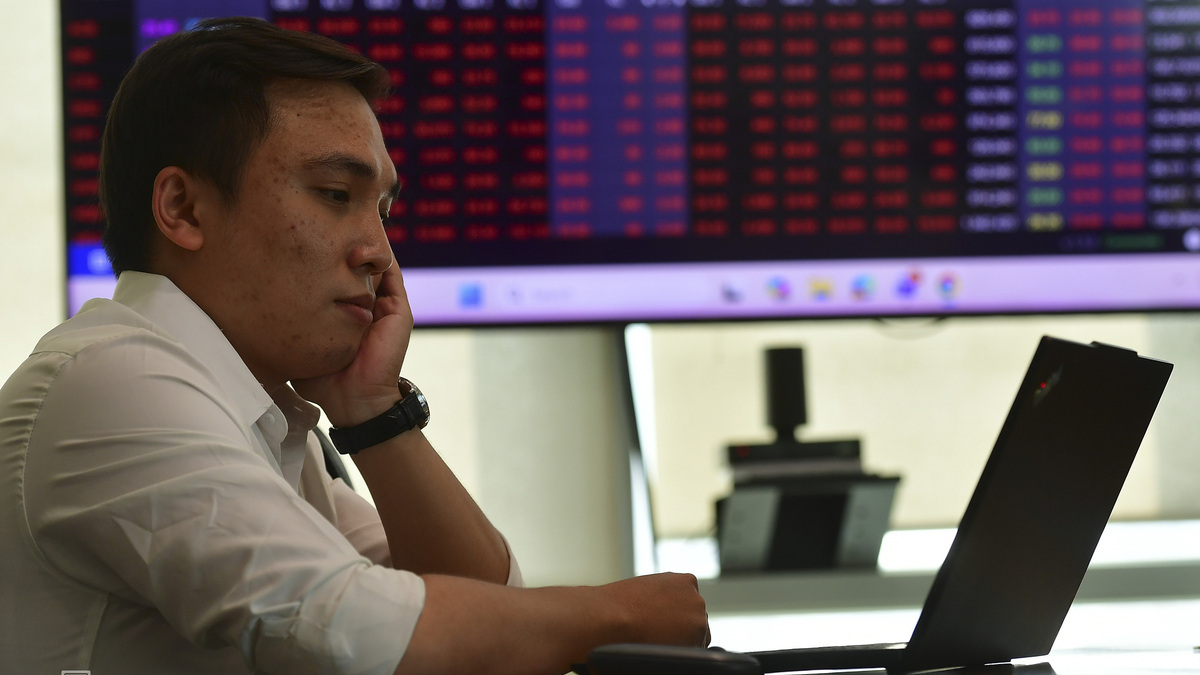
Compounding this liquidity crunch is the sustained exit of foreign investors. Foreign institutional investors were net sellers of over 24 trillion VND in October alone, continuing a trend that saw 1.6 trillion VND in net sales in August and 4.8 trillion VND in September. Analysts at VDSC note that the current market burden is being primarily shouldered by domestic retail investors, who remain heavily reliant on margin financing despite the lack of a clear upward trend.
Furthermore, the interest rate environment remains a critical factor. Thien Viet Securities (TVS) reports that 12-month deposit rates at several major banks are maintaining levels around 9% per annum. This yield is equivalent to, or in some cases higher than, the Earnings-to-Price (E/P) ratio of the VN-Index. Consequently, the relative appeal of holding equities compared to risk-free bank deposits has diminished significantly, discouraging fresh capital inflow and keeping market participants in a defensive posture.
Analysis of Systemic Implications
The potential for a "margin call cascade" is particularly acute in the current high-interest-rate environment, where the cost of carrying debt is rising while asset liquidity is declining. A sharp, sudden drop in the broader market, if accompanied by negative news flow or geopolitical instability, could act as a catalyst for widespread forced liquidation.
Industry experts suggest that the market is currently in a "wait-and-see" phase, where the lack of institutional participation makes the index highly sensitive to retail sentiment. Without a catalyst to boost trading volumes, the market remains trapped in a low-liquidity state, making it prone to high volatility on minimal volume.
The Path Forward: Patience as an Investment Strategy
Despite the cautionary outlook, SGI Capital maintains that the current valuation of many stocks is becoming increasingly attractive after months of persistent correction. However, for investors looking to establish new positions, the firm emphasizes the necessity of building a "margin of safety."
"To capture significant opportunities and achieve superior investment results, we must be patient and accept the need to overlook many small opportunities that lack a clear margin of safety," SGI Capital stated in their recent bulletin. The firm remains a proponent of the long-term potential of the Vietnamese equity market, noting that the last 20 years of historical data have repeatedly demonstrated that periods of extreme pessimism often precede the most significant cycles of wealth creation.
For retail investors, the takeaway is clear: the current market structure demands a reduction in reliance on leverage. With the market still in a process of deleveraging, professional analysts suggest that investors should prioritize capital preservation and focus on companies with strong balance sheets, high cash reserves, and the ability to navigate periods of tight liquidity.
As the market continues to reconcile the current high-margin environment with the prevailing macroeconomic headwinds, the coming months are expected to be a period of volatility. Whether the market can successfully transition through this deleveraging phase without a systemic shock will depend largely on the ability of investors to manage their debt exposure and the willingness of the broader market to wait for more favorable valuations and improved liquidity conditions.