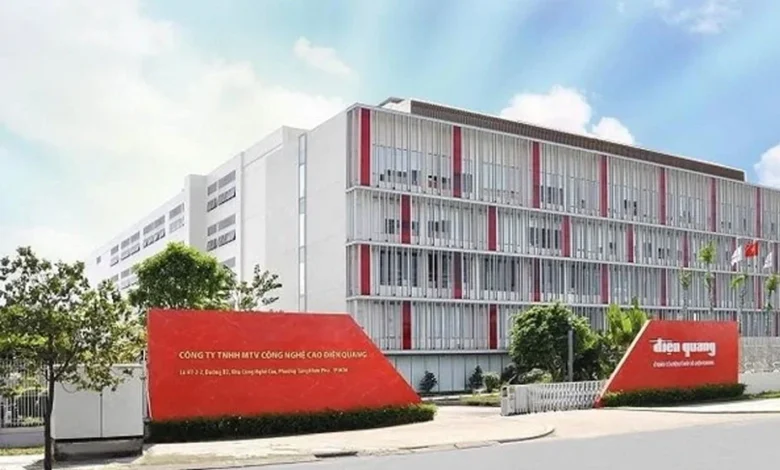
Dien Quang Lamp Joint Stock Company (DQC), once a titan of Vietnam’s industrial sector, is currently navigating a complex period of financial restructuring and operational transformation. Following a significant downward revision in its 2025 audited financial results, the company is attempting to regain its footing in an increasingly competitive market, shifting its focus from traditional lighting products to high-tech, smart solutions.
Financial Volatility and the 2025 Audit Adjustment
In recent weeks, DQC disclosed a sharp contraction in its post-audit profit for the 2025 fiscal year. The finalized figures revealed that net profit plummeted by nearly 60% compared to the pre-audit estimates, settling at approximately 4.9 billion VND. This adjustment represents a 58% decline from the initial report, sparking scrutiny from investors and stakeholders alike.
The primary driver behind this significant downward correction lies in a controversial accounting decision involving DQC’s subsidiary, Dien Quang High Technology. The company had previously set aside a 100% provision for a 21.25 billion VND investment in Xelex. However, upon external audit, this provision was not recognized as a deductible expense for corporate income tax purposes. Consequently, DQC was compelled to record an additional 4.25 billion VND in tax expenses. Further compounding these difficulties were adjustments related to financial revenue from interest income, which collectively exerted downward pressure on the company’s bottom line.
Since April 8, 2026, DQC shares have been under close supervision by the stock exchange. This regulatory action was triggered by the company receiving qualified opinions from auditors for two consecutive years—2024 and 2025. As of late September 2026, the stock price languished at 9,980 VND per share, a valuation that has not been seen since the middle of 2016, reflecting the market’s cautious sentiment toward the firm’s recovery trajectory.
A Chronology of Economic Challenges
The current financial turbulence is not an isolated event but rather the culmination of years of operational shifts.
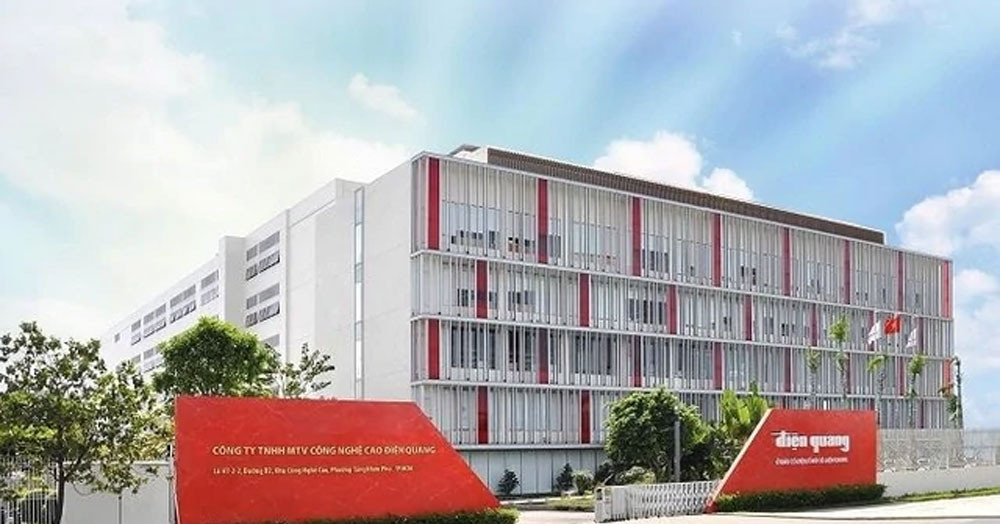
- 2022–2023: DQC faced a period of intense financial strain. In 2023, net revenue fell by 13% to 871 billion VND, while the company shifted from a modest profit of 15 billion VND in 2022 to a net loss of 33 billion VND. This was largely attributed to aggressive promotional spending, high financial provisioning, and rising interest costs associated with debt.
- 2024: The challenges deepened as DQC recorded a net loss of approximately 121.9 billion VND. Despite achieving a gross profit of 184 billion VND during the period, the company’s final bottom line was severely eroded by heavy operational costs and the lingering effects of the broader market slump.
- 2025–2026 (The Turnaround): Signs of stabilization began to emerge. In 2025, revenue rebounded to approximately 920 billion VND, a 13% increase. The momentum continued into the first half of 2026, with revenue reaching 565 billion VND—a 59% increase year-on-year—and a modest net profit of 14.2 billion VND.
Notably, by the end of June 2026, the company’s undistributed post-tax profit swung from a negative 83.7 billion VND at the start of the year to a positive 125.9 billion VND. However, this should not be interpreted as the company generating 200 billion VND in new profit. A significant portion of this fluctuation stems from a strategic transfer of nearly 200 billion VND from the Investment and Development Fund to undistributed earnings, a move approved at the 2026 Annual General Meeting of Shareholders to clean up the balance sheet.
The Evolution of the Lighting Market
Dien Quang was established in 1973 and long stood as a hallmark of Vietnam’s industrial self-reliance, building its reputation on Japanese-standard production technology. At its peak, the company commanded roughly 40% of the domestic lighting market, successfully competing against global giants like Rang Dong and Philips. In 2016, DQC was recognized by Forbes Vietnam as one of the 50 best-listed companies in the country.
The company’s original business model was built on high barriers to entry: complex manufacturing technology for incandescent bulbs, high capital expenditure requirements for factories, and an extensive distribution network. These factors protected its market share for decades. However, the rise of LED technology fundamentally disrupted this landscape.
As global supply chains matured, LED components became commoditized. Chinese manufacturers, leveraging massive economies of scale, drove production costs down, drastically reducing the barrier to entry. Where once a competitor needed a massive factory and decades of technical expertise, the LED era allowed new, agile players to flood the market with low-cost alternatives. This shift forced DQC into a defensive position, where traditional manufacturing advantages were no longer sufficient to maintain historical profit margins.
Strategic Pivots and Future Challenges
Recognizing the shifting tides, DQC has invested heavily in LED technology and smart lighting solutions. Yet, the transition has been capital-intensive, and the company has struggled to match the efficiency of its previous golden age. The COVID-19 pandemic also disrupted export markets and domestic projects, further complicating the company’s efforts to fund its transformation.
Looking forward, the industry is moving beyond simple hardware sales. According to the International Energy Agency (IEA), the next phase of the lighting market will be defined by energy efficiency, smart controls, sensors, and connectivity. For DQC, the opportunity lies in transitioning from a manufacturer of traditional bulbs to a provider of smart lighting ecosystems and high-tech services.
The company still possesses significant intangible assets: a well-known legacy brand, deep technical knowledge, and an established customer network. The management’s challenge is to convert these assets into consistent revenue growth and improved cash flow.
Broader Implications and Corporate Governance
The recent instability at DQC has also brought historical corporate governance questions back into the spotlight. The company has previously been linked to discussions regarding the business interests of the family of former Deputy Minister of Industry and Trade, Ho Thi Kim Thoa. Along with other entities like Rang Dong Plastic, DQC’s ownership and management structure have occasionally drawn public interest regarding the transparency of decision-making processes within large, legacy-state-connected firms.
The current board is under pressure to deliver a sustainable turnaround. Analysts suggest that for DQC to return to its status as a market leader, it must do more than just manage its balance sheet. It requires a fundamental shift toward higher value-added products that leverage its technical heritage while meeting the sophisticated demands of the modern "smart city" and "smart home" infrastructure.
In conclusion, while the most recent figures indicate that the "picture is brightening," the road ahead remains arduous. The company’s ability to maintain profitability while simultaneously funding innovation will determine whether it can reclaim its past glory or whether it will continue to struggle in a market that has fundamentally outgrown its legacy foundations. Investors will be watching the upcoming quarterly results closely, looking for evidence that the recent revenue spikes are sustainable and that the cost-cutting measures are finally yielding real, bottom-line value.