The strategic dilemma facing Vietnamese manufacturers during the inaugural Vietnam Cultural Day holiday period

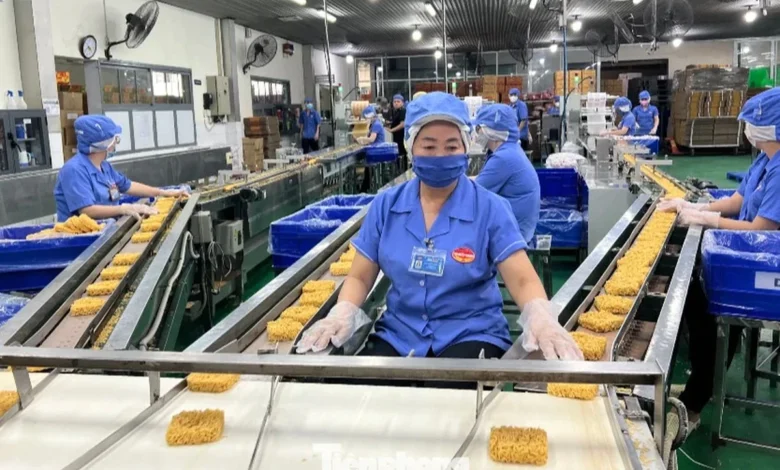
The introduction of Vietnam Cultural Day, observed on November 24, as a recognized national holiday in 2026 has prompted a complex operational challenge for the country’s manufacturing sector. As the nation prepares to commemorate its cultural heritage, business owners and human resource departments are grappling with the logistical friction between honoring a public holiday and maintaining the momentum of high-demand production cycles. While some enterprises have opted to bridge the gap to create a four-day weekend for their workforce, many others—particularly those in labor-intensive industries—are adhering strictly to the statutory one-day leave, sparking a broader discussion on labor flexibility, productivity, and employee welfare.
The Emergence of Vietnam Cultural Day
Vietnam Cultural Day, designated as November 24, was established to honor the country’s rich heritage, artistic creativity, and the preservation of traditional values. As of 2026, the government has mandated this as a one-day public holiday, entitling employees to a paid day off. The intention behind the holiday is to provide citizens with the time to engage in cultural activities, visit historical sites, and participate in community events that foster social cohesion. However, the timing of this holiday—falling on a Tuesday in 2026—has created a "mid-week" disruption, which is notoriously difficult for assembly lines and continuous-process manufacturing plants to navigate without incurring significant costs.
Operational Constraints and the Cost of Downtime
For industries such as food processing, textile manufacturing, and heavy assembly, production is defined by "run-time." Stopping machinery for a single day often involves more than just a temporary cessation of output; it involves the cost of cooling down industrial equipment, the loss of efficiency during start-up, and the logistical nightmare of managing supply chain dependencies.
Pham Minh Hien, Vice Chairman of the Trade Union at Colusa-Miliket, a prominent food processing firm in Ho Chi Minh City, highlights the delicate balancing act required. "In manufacturing, our operational schedules are dictated by the necessity of consistency," Hien explained. "When a holiday falls in the middle of the week, the company must weigh the benefits of a extended break against the financial penalties of shutting down production lines. We are currently in active discussions with our workers to determine if we should bridge the holiday to allow for a four-day break, or if we should maintain standard operations to meet year-end order targets."
The sentiment is echoed across various industrial zones. Enterprises are increasingly looking for ways to satisfy employee desires for longer breaks while minimizing the economic impact of downtime. This often involves collective bargaining, where the trade union acts as the intermediary to ensure that any deviation from the standard calendar is mutually beneficial.
The Worker’s Perspective: Between Leisure and Income
For many laborers, the prospect of a four-day break is an opportunity to return to their home provinces, visit family, or handle personal administrative tasks that are otherwise neglected during the busy work week. Nguyen Thi Hoa, a garment worker based in Chanh Hung, represents the typical workforce demographic that stands to benefit from a bridge holiday.
"My plan was to take my children to Vinh Long to visit their grandparents," Hoa said. "If the company doesn’t allow for a bridge day on Monday, we are effectively tied to the city, limiting our ability to travel. However, we also understand that the company has a massive backlog of orders for the year-end season. It is a trade-off between our personal needs and the company’s survival."
Despite the desire for extended leave, workers are acutely aware of the potential for reduced pay if they take unpaid leave, or the stress of "making up" hours if the company requires overtime on subsequent Saturdays to compensate for the lost production day.
Analyzing the "Bridge" Strategy
The practice of "bridging" a holiday—moving a work day to create a continuous block of rest—is common in Vietnam, particularly during the Tet Lunar New Year or Reunification Day. However, the application of this practice for a new, single-day holiday like Vietnam Cultural Day is less standardized.
Experts in labor relations suggest that the decision to bridge the holiday rests on three primary factors:
- Order Backlogs: Firms operating at peak capacity for the fourth quarter are less likely to approve a bridge schedule.
- Internal Regulations: Companies that have already exhausted their flexible scheduling options for the year find it difficult to adjust their calendars without violating internal labor contracts.
- Employee Consensus: A move to a bridge schedule requires a high degree of transparency. If the trade union cannot secure a clear majority of support from the workers, the company typically defaults to the standard one-day leave to avoid labor disputes.
Industry Case Studies: In-house Policies
At the CP Printing Company No. 7, located in the Tan Tao Industrial Zone, the policy remains firm. Truong Hoang Tam, Chairman of the company’s Trade Union, confirmed that the company is adhering to the state-mandated schedule. "We are operating at full capacity to meet our year-end sales targets," Tam noted. "While we cannot grant a bridge holiday, we encourage our staff to utilize their annual leave days if they wish to extend their time off. This keeps production stable while providing individual flexibility for those who truly need the extra days."
This strategy—relying on individual annual leave rather than a company-wide shutdown—is becoming the preferred approach for many mid-to-large-scale firms. It allows for a staggered reduction in workforce rather than a total cessation of operations.
Conversely, companies like Yazaki EDS Vietnam are navigating the complexities of the surrounding work days. Pham Thi Tuyet Nhung, a representative from the company, noted that November 23 (a Monday) and November 25 (a Wednesday) remain standard working days. For workers who wish to take these days off to create a bridge, they must agree to perform "make-up" work on a future Saturday. This creates a predictable, albeit more demanding, schedule for the workforce.
Broader Implications for the Future
The integration of Vietnam Cultural Day into the national calendar marks a significant cultural milestone, but it also underscores the growing need for more sophisticated labor management in an increasingly globalized economy. As Vietnam moves away from low-value assembly toward higher-complexity manufacturing, the rigidity of national holidays will continue to clash with the requirements of international supply chains.
From a legal standpoint, the 2019 Labor Code provides the framework for this flexibility, stating that employees are entitled to 12 days of paid annual leave, and any additional leave beyond statutory holidays is subject to negotiation between the employer and the employee. The current situation with Vietnam Cultural Day serves as a litmus test for how labor-management relations will evolve in the coming years.
Conclusion: Finding the Equilibrium
As of early November 2026, the industrial landscape remains divided. While the cultural significance of the day is undisputed, the economic reality of a year-end production surge cannot be ignored. The most successful companies will be those that communicate their scheduling decisions well in advance, allowing employees to plan their personal lives while ensuring that production targets remain on track.
Ultimately, the holiday period for Vietnam Cultural Day is not just a time for celebration; it is an exercise in negotiation. It highlights the shifting priorities of the modern Vietnamese workforce—which increasingly values time for family and personal development—and the ongoing responsibility of the private sector to adapt its operational models to support a healthy, sustainable work-life balance without compromising economic growth. As businesses move toward the final weeks of 2026, the focus remains on finding that elusive equilibrium: honoring the culture of the past while securing the productivity of the future.
Related posts: