The surging global influence of artificial intelligence has placed Nvidia CEO Jensen Huang at the center of the technological world, resulting in significant adjustments to his personal security protocols. According to regulatory filings submitted to the U.S. Securities and Exchange Commission (SEC) in May 2026, the semiconductor giant spent approximately 3.98 million USD during the 2026 fiscal year to ensure the safety and security of its leader. This expenditure covers a comprehensive suite of protective services, ranging from residential security infrastructure to specialized travel arrangements, private aviation, and professional security personnel.
As Nvidia’s market capitalization has scaled to unprecedented heights, the company’s board of directors has increasingly prioritized the protection of its chief executive. The rise in security spending reflects both the heightened public profile of Mr. Huang and the operational necessity of ensuring the continuity of the company’s leadership during a period of intense global scrutiny.
A Chronology of Escalating Security Costs
The financial commitment to Mr. Huang’s safety has grown in direct correlation with Nvidia’s expansion. In the 2023 fiscal year, the company’s proxy statements revealed a total expenditure of 565,305 USD specifically allocated for residential security. At that time, this amounted to a monthly average of approximately 47,100 USD. Additionally, the company provided roughly 90,217 USD for security monitoring services and 13,483 USD for supplemental transportation.
By the 2024 fiscal year, Nvidia reported a notable increase in these expenses, attributed to the broader implementation of full-scale security measures that were only partially operational during the previous period. The 2025 fiscal year saw this figure climb to over 3.45 million USD, as global business activities and the frequency of Mr. Huang’s travel increased significantly, necessitating a more robust and mobile security footprint.
The most recent figure of 3.98 million USD for the 2026 fiscal year represents the continued refinement of a comprehensive security program designed to mitigate risks associated with the CEO’s high-profile status. The program is not static; it is subject to regular assessment by independent third-party firms, and the specific allocations are reviewed annually by the board to ensure they remain proportional to the threat landscape and the company’s operational requirements.
The Real Estate Portfolio of the Huang Family
The security measures, while extensive, are contextualized by the significant real estate holdings maintained by the Huang family. With a total purchase value of approximately 53 million USD, these properties are situated in high-value, high-visibility regions in California and Hawaii.
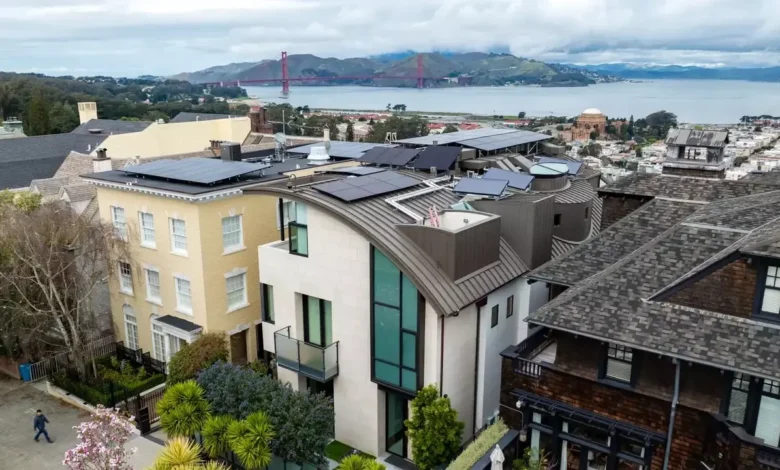
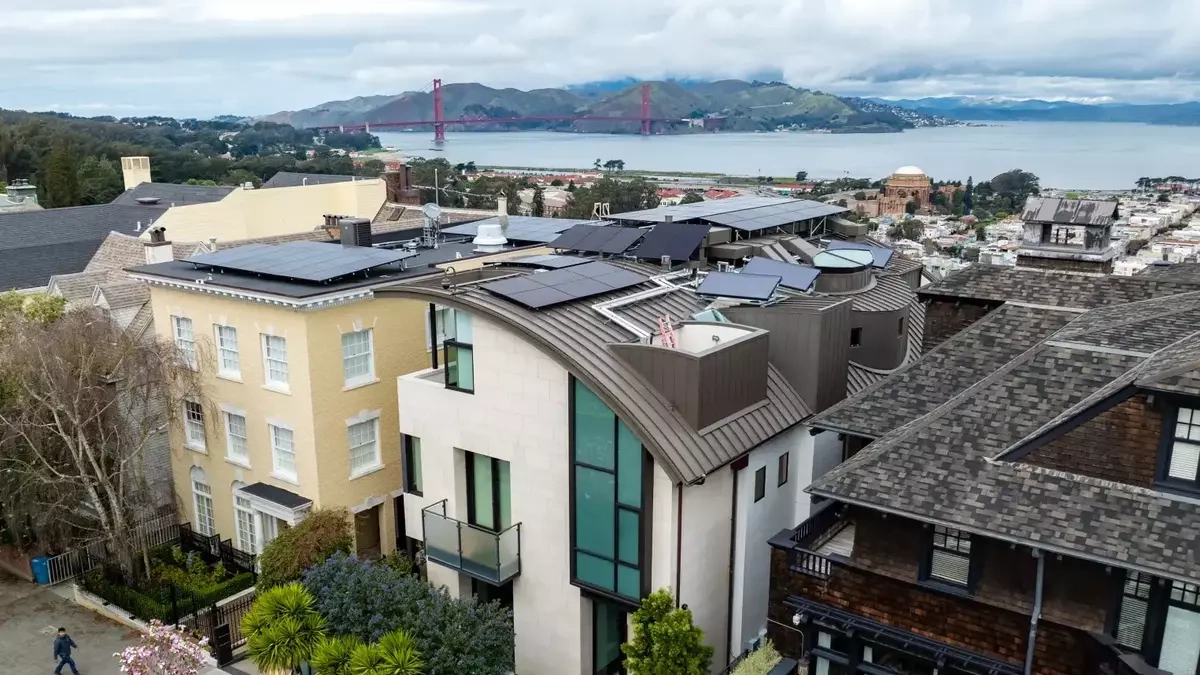
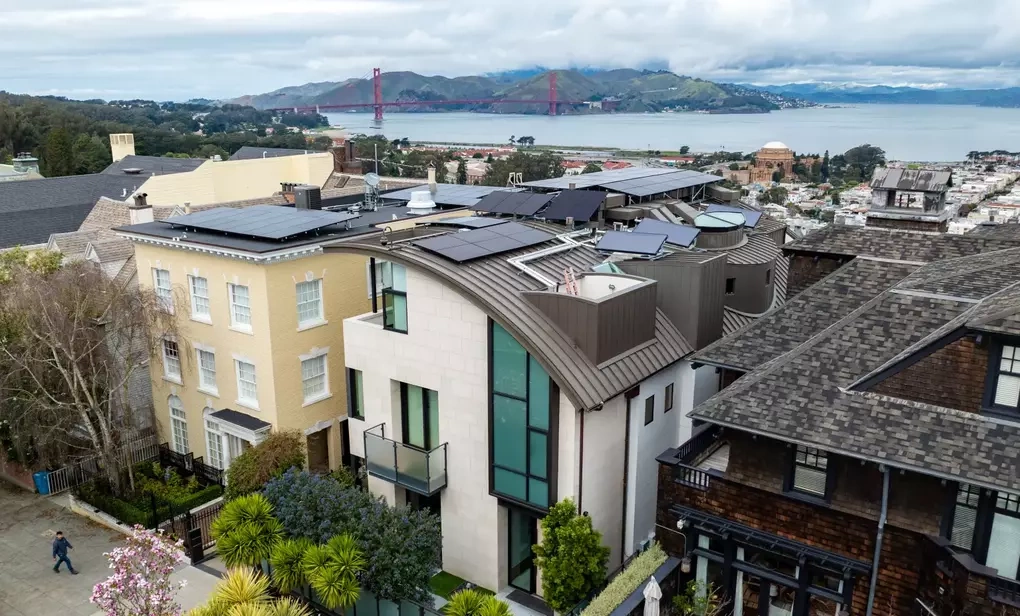
The centerpiece of this portfolio is a 38 million USD estate located in the Pacific Heights neighborhood of San Francisco. Often referred to as "Billionaires’ Row," this area is home to some of the most affluent individuals in the United States. Acquired in 2017 through an entity known as Riva LLC—a vehicle linked to the financial planning of the Huang family—the estate spans approximately 1,059 square meters. The property is a marvel of modern architecture, featuring seven bedrooms, eight bathrooms, private spa facilities, a fitness center, two wine cellars, and a three-car garage. Its design utilizes high-end, glare-reducing glass, providing expansive views of the Golden Gate Bridge and the San Francisco Bay while minimizing visibility into the home from the street.

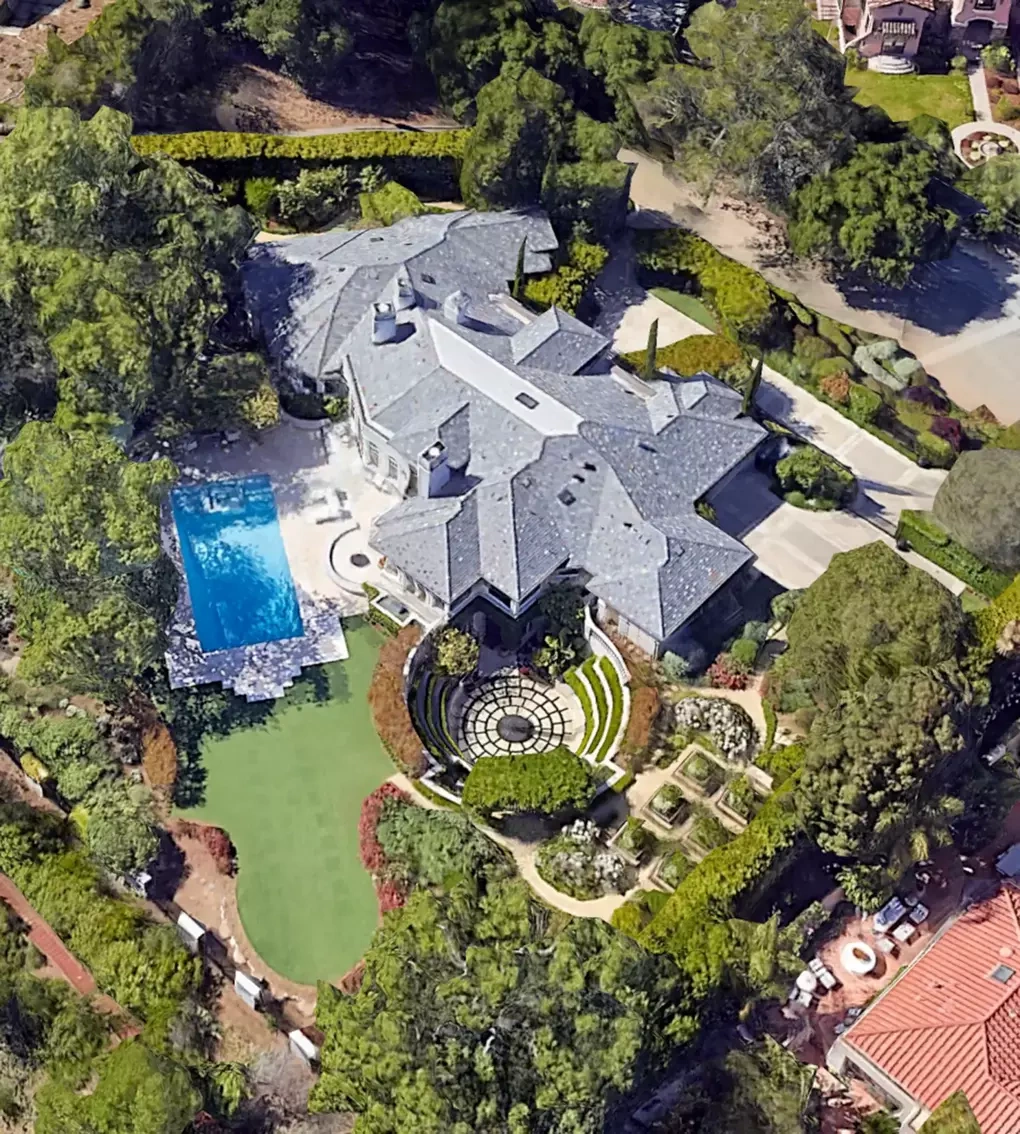
Beyond the urban setting of San Francisco, the family retains a property in Los Altos Hills, California, purchased in 2003 for 6.9 million USD. This 650-square-meter residence offers a more traditional Silicon Valley aesthetic, set on a sprawling lot with lush landscaping and gardens, providing a stark contrast to the dense, vertical nature of their city home.
Furthermore, in 2004, the family expanded their portfolio to include a vacation estate in Wailea, Maui, Hawaii, acquired for approximately 7.5 to 7.8 million USD. Completed in 2008, this property is situated within the gated Wailea Resort community, occupying a significant 743-square-meter footprint. These diverse residential environments present unique security challenges, ranging from urban intrusion risks in San Francisco to the complexities of protecting remote, large-scale luxury estates in Hawaii.
Strategic Rationale and Corporate Policy
Nvidia maintains that these security expenditures are strictly business-related. In its SEC filings, the company explicitly states that the security program is not intended as a personal perk or a form of executive compensation. Instead, the board of directors categorizes these costs as essential business expenses, driven by the requirement to mitigate the heightened risks associated with Mr. Huang’s public identity and the critical nature of his role in steering the company through the global AI revolution.
The policy dictates that security personnel must be present at the CEO’s primary residences. When traveling for business or attending high-stakes industry functions, Mr. Huang is required to utilize company-approved transportation, which often involves professional security drivers or vetted car services. Furthermore, the use of private aircraft for both business and personal travel is strictly governed by pre-defined conditions set by the board to ensure that safety and security protocols remain consistent, regardless of the nature of the trip.
Broader Implications for Corporate Governance
The multi-million dollar security budget for a corporate leader highlights a growing trend among major technology firms. As CEOs become synonymous with the strategic direction of their companies—and often become polarizing figures in the public discourse—the boundary between corporate assets and personal protection continues to blur.
Analysts note that for a company like Nvidia, which has become the primary engine of the global artificial intelligence infrastructure, the "key person risk" is immense. If the CEO were to be incapacitated or compromised, the potential impact on shareholder value and global technology supply chains would be catastrophic. Consequently, shareholders have largely accepted these costs as a form of "corporate insurance."
The transparency in reporting these figures serves two purposes: it satisfies regulatory requirements for disclosure and signals to investors that the board is taking proactive steps to protect its leadership. By hiring independent firms to conduct annual security audits, Nvidia attempts to remove any appearance of arbitrariness in the spending, grounding the budget in data-driven risk assessments.
Analysis of Future Trends
Looking forward, as Nvidia’s influence continues to expand into new sectors such as autonomous robotics, sovereign AI, and data center dominance, the security requirements for its executive team are unlikely to decrease. The shift toward a "total protection" model, which incorporates cybersecurity, physical security, and logistical security, is becoming the standard for the upper echelon of the S&P 500.
While some critics might point to the absolute dollar amount as excessive, the proportionality of these costs against Nvidia’s massive revenue and market valuation suggests that they remain a rounding error in the company’s broader financial picture. The primary focus for stakeholders remains the CEO’s ability to execute the company’s long-term vision. As long as the security protocols effectively facilitate Mr. Huang’s ability to lead without the distraction of physical threats, the expenditure will likely continue to be viewed as a necessary cost of doing business in the modern, high-stakes environment of the technology sector.
Ultimately, the case of Jensen Huang illustrates the intersection of personal privacy, corporate responsibility, and the extreme demands placed on leaders in the 21st-century digital economy. As the world becomes increasingly reliant on the hardware and software produced by Nvidia, the protection of its chief architect becomes not just a personal matter, but a matter of international industrial security.