BYD Da Tang safety concerns arise following widespread reports of incorrect wheel and tire assembly

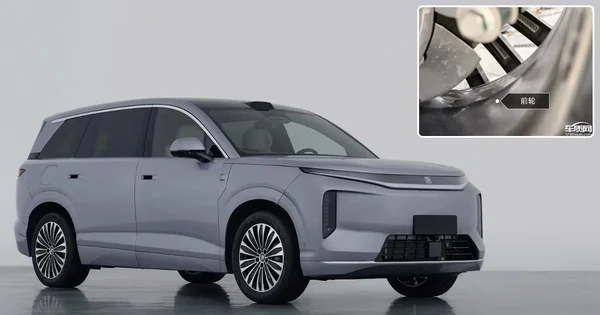
The automotive industry is currently witnessing a significant quality control controversy involving the BYD Da Tang (also marketed as the Great Tang), a premium SUV from the Chinese automaker’s "Dynasty" series. Since its market debut in mid-July 2026, the vehicle has been praised for its impressive range and advanced electric powertrain. However, a growing number of owners have reported a critical manufacturing error: the front and rear wheels and tires have been installed in the wrong positions. This assembly oversight, where wheels with different rim widths are swapped between the front and rear axles, has raised serious concerns regarding vehicle stability, tire degradation, and the integrity of safety systems.
The Nature of the Assembly Defect
The technical issue centers on the specific configuration of the BYD Da Tang, particularly the 950 km Rear-Wheel Drive (RWD) variant. Under standard design specifications, the vehicle requires a staggered wheel setup to optimize handling and traction. Specifically, the front axle is engineered to utilize 255/50R20 tires mounted on 8J rims, while the rear axle requires wider 275/45R20 tires paired with 9J rims. The "J" designation refers to the rim width, which is critical for supporting the sidewall structure of the tire.
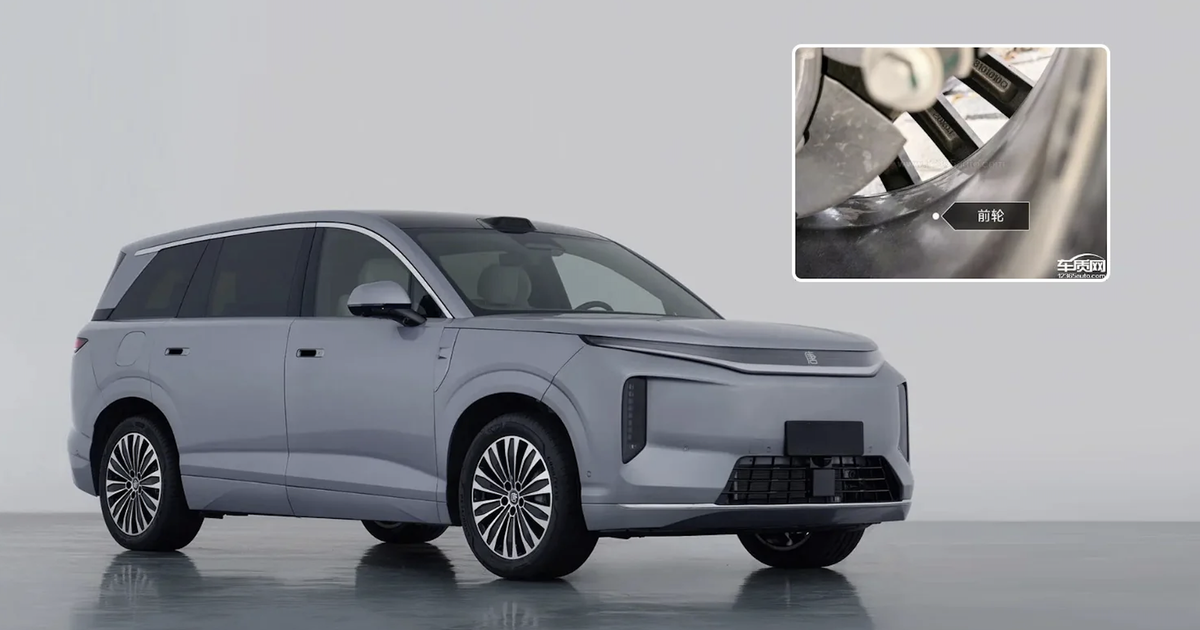
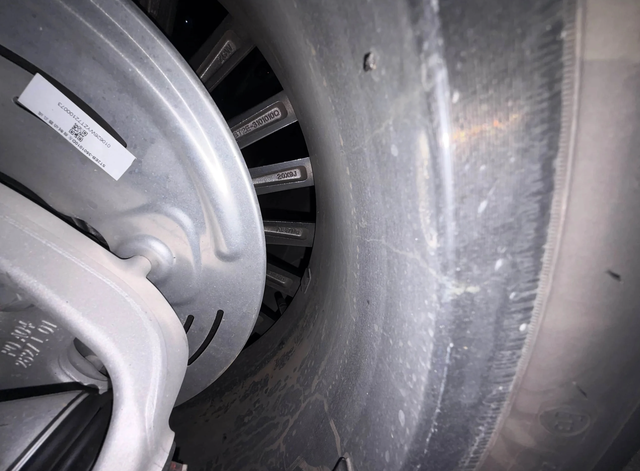
Owners began noticing irregularities during daily operation, including unusual handling characteristics and, in more severe cases, rapid tire wear and reports of tire failure. Upon closer inspection at authorized service centers, it was confirmed that while the tires themselves were often installed on the correct sides, the rims had been inverted during the factory assembly process. Consequently, the narrower 8J rims were found on the rear, while the wider 9J rims were placed on the front, violating the manufacturer’s design parameters.
Technical Implications for Vehicle Safety
The mismatch between rim width and tire dimensions has profound consequences for vehicle dynamics. According to the European Tyre and Rim Technical Organisation (ETRTO) guidelines, the 255/50R20 tires used on the front can safely accommodate rim widths ranging from 7J to 9J. Therefore, when mounted on the 9J rims (intended for the rear), the front tires remain within the permissible, albeit tight, technical limits.
The situation is significantly more precarious for the rear axle. The 275/45R20 tires are designed for rims between 8.5J and 10.5J. Installing them on the 8J rims—which are too narrow—prevents the tires from seating correctly according to design specifications. This incompatibility can alter the shape and structural tension of the tire sidewalls. Such distortion affects the contact patch area, which is vital for maintaining grip, especially during high-speed maneuvers or when navigating sharp turns.
Furthermore, the integrity of the Electronic Stability Control (ESC) system is compromised. The ESC relies on precise data from wheel speed sensors to monitor vehicle movement and intervene by adjusting brake force and motor torque to prevent loss of control. When the wheel and tire configuration deviates from the vehicle’s programmed baseline, the input data becomes inaccurate. This can lead to a reduction in the system’s ability to maintain stability during emergency maneuvers, creating a substantial safety risk for drivers and passengers.
Chronology of Events and Consumer Complaints
The issue first gained public traction through reports on 3YC User Report, an independent portal dedicated to monitoring BYD vehicle performance. The timeline of the discovery suggests that the error was not an isolated incident but a systematic failure in the production line.

- July 2026: The BYD Da Tang is officially launched in the Chinese market, receiving strong initial interest for its 105.8 kWh and 130.2 kWh LFP battery options.
- August – October 2026: As the initial wave of vehicles reaches customers, early reports of "strange handling" and "excessive tire wear" begin appearing on automotive forums.
- Early November 2026: The frequency of reports spikes. Numerous owners escalate their concerns to 12365auto.com, the leading platform for consumer automotive grievances in China.
- Mid-November 2026: Technical verification by local service centers confirms the widespread nature of the rim-swapping error.
By late 2026, the volume of complaints had grown to a scale that forced the manufacturer to acknowledge the issue internally. According to China EV DataTracker, BYD delivered 10,997 units of the Da Tang in September 2026 alone, highlighting the potential scale of the affected fleet.
Demands for Remediation and Official Responses
Affected owners are not satisfied with simple, localized fixes. The community has issued a list of formal demands to BYD, arguing that the assembly error may have caused secondary damage to other vehicle components.
Their demands include:
- Comprehensive Inspections: A full audit of the suspension, steering linkage, wheel speed sensors, and drivetrain components for any vehicles found with incorrect rim placement.
- Replacement of Damaged Parts: Any components found to be compromised due to improper rim-tire geometry must be replaced at no cost to the consumer.
- Extended Warranty Coverage: A formal extension of the warranty for the chassis and drivetrain systems, specifically to account for any long-term effects of the assembly error.
- Compensation for Inconvenience: Reimbursement for travel expenses incurred during the time the vehicle is under repair, or the provision of temporary replacement vehicles.
While BYD has yet to issue a formal global recall statement, the company is reportedly working with its dealer network in China to rectify the issue for affected customers. The primary challenge for the automaker is restoring consumer confidence in the "Dynasty" brand, which has historically been positioned as a leader in both technology and safety.
Broader Impact and Market Analysis
The incident serves as a stark reminder of the complexities involved in the rapid scaling of electric vehicle production. As BYD continues to ramp up output to meet the surging demand for premium SUVs, maintaining rigorous quality control across high-volume production lines becomes increasingly difficult.
From an industry perspective, the BYD Da Tang incident highlights the dangers of "staggered" configurations—a design choice often made to improve aesthetics and handling performance but one that introduces greater complexity into the logistics and assembly process. For the consumer, it emphasizes the importance of independent pre-delivery inspections (PDI) and the value of community-driven reporting platforms in the digital age.
The financial and reputational implications for BYD are significant. Priced starting at 239,900 yuan (approximately 35,900 USD), the Da Tang is a mid-to-high-range product. Owners of such vehicles expect a premium ownership experience, and a fundamental mechanical error occurring just months after delivery risks alienating a core segment of the brand’s customer base.
As regulators in China monitor the situation, the industry will be watching to see how quickly and transparently BYD handles the remediation process. Whether the company opts for a voluntary recall or a quiet dealer-led service campaign remains to be seen, but the outcome will likely set a precedent for how future quality-related disputes are handled in the competitive Chinese EV market. For now, owners are advised to have their wheel configurations verified by certified technicians to ensure their vehicle meets the necessary safety standards for public road operation.